Fourteen hundred and twelve days since I last spoke to my mother, and the kitchen in Tucson still smelled faintly of her old lemon-oil polish. I pulled my pickup into the gravel drive at 4:15 in the afternoon, the desert heat pressing down through the truck roof like a flatiron. My boots felt heavy, caked with red dirt from the job site out on Oracle Road, and my shoulders ached from three straight weeks of lifting drywall. The house sat quiet under the pale Arizona sky, the aluminum screen door hooked back against the siding just the way she always kept it when the evening breeze started up.
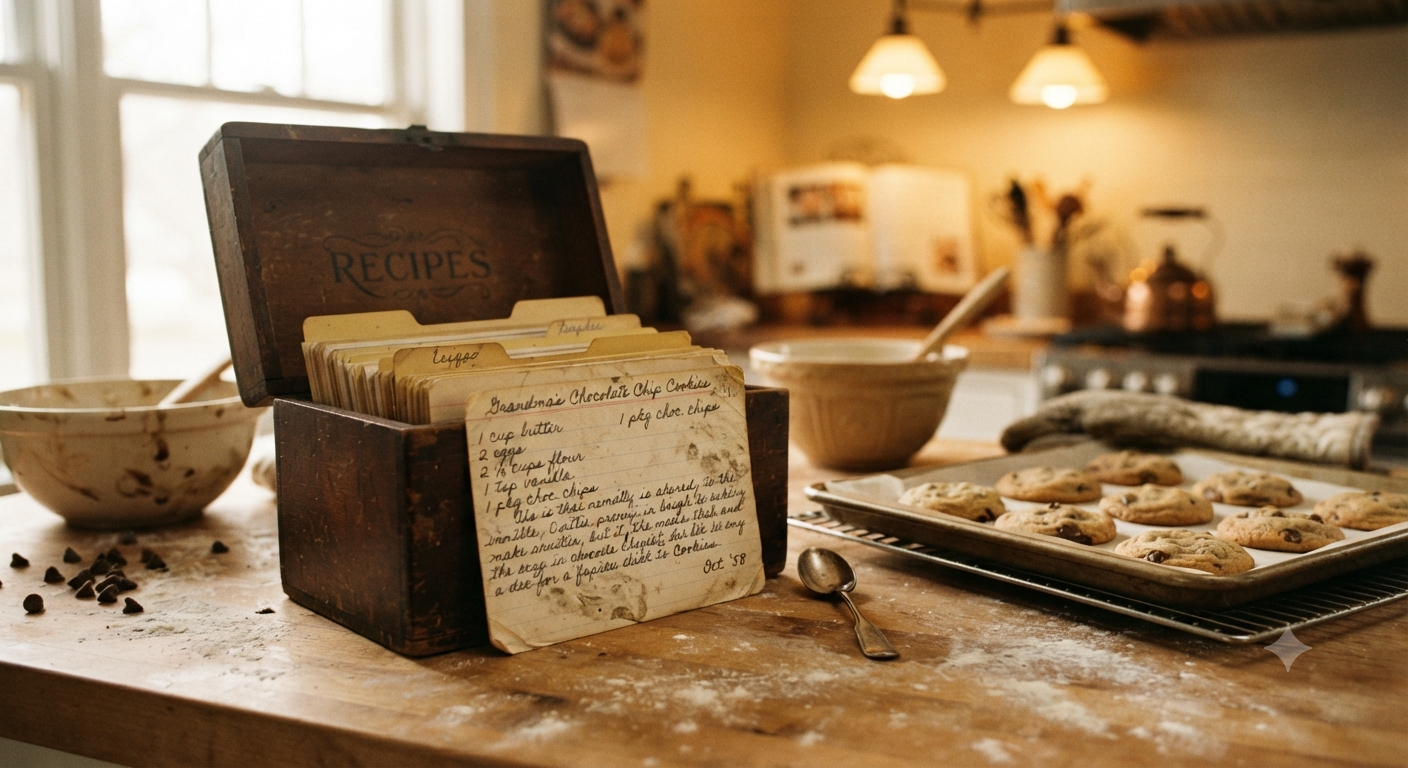
Inside, the living room looked just like it had when I packed my tools into the back of the Ford and drove off toward Phoenix five years back. Only now the air felt different, stale and heavy with the smell of old paper and cedar chests. The executor of the estate, a man named Henderson with ink-stained fingers and a tie that looked like it had survived the Carter administration, had left the cedar box right on the yellow Formica kitchen table. It was my grandmother’s old recipe box, the one she used to keep behind the flour canister with her church bulletins and grocery receipts tucked between the dividers.
I didn’t open it right away. I dropped my canvas tool bag by the icebox, washed the drywall dust off my hands in the porcelain sink, and poured myself a glass of tap water that tasted mostly of copper and chlorine. The sun was dipping low behind the saguaros outside the window, painting the kitchen wall a dusty orange that hurt my eyes if I looked at it too long. I pulled out one of the metal chairs, the chrome legs scraping against the linoleum with a sound that made my teeth ache, and lifted the brass latch on the lid.
The wood smelled of old vanilla and clove oil. Inside were rows of index cards yellowed at the edges, written in my grandmother’s tight, careful cursive that looked like rows of barbed wire. I flipped past the pot roast and the peach cobbler until I found the card labeled cookies in the back section. The heading said Nana’s Best Chocolate Chips, dated back to the summer of 1974 when they lived over in Mesa before the heat got to my grandfather’s lungs.
The instructions were simple enough, or so I thought after a long week of reading blueprints and checking load calculations. Two cups of flour, a pinch of salt, shortening instead of butter because that was what she always swore by, and a heavy hand with the dark chocolate chunks she used to buy in bulk down at the mercantile. I didn’t have much of a sweet tooth, but standing there in the empty house with the hum of the old refrigerator keeping time, the idea of baking something felt like a way to anchor myself to the floorboards.
I drove out to the Safeway on Campbell Avenue before dark, bought the cheap flour in the paper sack and a yellow tub of Crisco, and came back to preheat the oven. The old electric range took ten minutes just to smell like hot iron. When the dough was mixed, it looked greasy and gray, sticking to my knuckles like wet clay, but I rolled them into balls anyway and shoved the tin sheet onto the middle rack.
Twenty minutes later, the kitchen didn’t smell like vanilla or baking. It smelled like scorched lard and burnt sugar. I pulled the pan out with a pair of folded dish towels because I couldn’t find her potholders anywhere in the drawers. The cookies had spread out across the metal until they formed one giant, flat, greasy crust that looked like a piece of shingle pulled off a roof.
I let them cool on the counter for ten minutes while the sun went down completely and the desert night turned the window glass black. I broke off a corner and put it in my mouth. It tasted like salt, old grease, and cardboard. I chewed it twice and spat it into the trash can by my knee.
I tried again on Tuesday morning before heading out to the site. I bought butter this time, thinking maybe she had written shortening down just to be difficult, and measured the flour twice on a digital scale I kept in my truck. I watched the oven window like I was monitoring a pressure valve on a steam line. The timer dinged at 3:44, and I pulled the tray out with high hopes. They looked better rounder, darker around the edges, with the chocolate melted into little pools on top.
One bite told the whole story. They were so salty my tongue went numb at the back, and the center was as raw and doughy as paste. I stood there by the stove with the half-eaten cookie in my hand, feeling a hot, stupid anger rise up behind my ears that had nothing to do with the flour and everything to do with the fact that nothing in this house ever worked the way it was supposed to.
I didn’t plan on calling her. I swear to you I didn’t even have her number punched into the phone until I found myself staring at the little green call button on my cell screen while leaning against the refrigerator door. My thumb shook just a little bit, not from fear, but from the sheer weight of ten years of silence sitting between us like a loaded trailer hitch.
The phone rang three times before she picked up on the other end, her voice thin and dry as corn husks. She didn’t say hello. She just said my name like she had been sitting by the instrument waiting for the wire to hum.
“Dale,” she said, and the sound of it hit me right behind the breastbone.
I didn’t waste time with how are you or I’m calling about the house. I held the burnt cookie up to the phone like she could see it through the wires and told her straight out. “Nana’s recipe is completely wrong. I followed it down to the letter twice, and it tastes like axle grease and salt.”
There was a long silence on the line, the kind where you can hear the faint hum of a ceiling fan three states away in a little apartment in Albuquerque. Then she let out a dry, rattling cough that turned into a real laugh, the kind I hadn’t heard since I was twelve years old sitting on her back porch shelling peas into an old galvanized bucket.
“That’s because it’s not the real recipe,” she said, and her voice didn’t sound old anymore; it sounded sharp as a tack.
I stood there in the dark kitchen with the hum of the icebox and the smell of scorched lard in my hair. “What do you mean it’s not the real recipe? It’s right here in her handwriting on the index card.”
“The real one is in my head,” she said, and I could hear her shifting the receiver against her shoulder. “She gave you the fake one so you’d call me. She knew we’d stopped talking, and she wasn’t about to let you inherit her kitchen without fixing what was broken between us first.”
I didn’t say anything back for a long minute. The kitchen window showed my own reflection in the dark glass, tired-looking and gray around the temples, holding a dead woman’s bad instructions in one hand and a phone in the other.
“She put two tablespoons of salt in that card on purpose,” she added, softer this time. “Just to see how long it would take you to complain.”
I stayed on that phone for forty-two minutes while she walked me through the real measurements, the ones that weren’t written down on any piece of paper in that cedar box. She told me about the butter instead of the lard, about the brown sugar packed down hard until your knuckles turned white, and about the extra splash of vanilla that my grandmother used to keep hidden behind the canned peaches.
I wrote it all down on the back of an envelope with a dull pencil I found behind the toaster. By the time we hung up, my hand was cramped and my eyes felt hot behind my glasses, but the kitchen didn’t smell quite so empty anymore.
The next day after work, I didn’t go straight back to the motel on the interstate. I stopped at the market on 4th Street, bought two blocks of real sweet cream butter and a bag of dark chocolate chips, and drove back to the house before the sun was even down.
The cookies came out golden and crisp on the outside, soft right in the middle, smelling like warm butter and brown sugar the way they used to back when I was ten years old before the arguments started and we all went our separate ways. I put four of them on a paper plate and left the rest on the counter for the estate man when he came back on Thursday morning.
I called her again the next afternoon at four o’clock precisely, before I even took my boots off at the door. She picked up on the second ring, and I didn’t even wait for her to say hello.
“They’re good,” I told her, leaning my forehead against the cool yellow wallpaper of the hallway. “They’re actually good this time.”
“I told you so,” she said, and she didn’t sound triumphant; she just sounded like my mother, waiting for me to sit down at the table.
We talked for twenty minutes about the weather in Albuquerque and the price of copper wire at the yard down on Oracle, nothing important, nothing that touched on the ten years we spent pretending the other one didn’t exist. But when we hung up, I left my truck keys on the little wooden table by the door instead of putting them back in my pocket. I knew I’d have to call her again tomorrow if I wanted to know how to make the peach cobbler, and for the first time in five years, the thought of picking up that phone didn’t make my hand feel like lead.