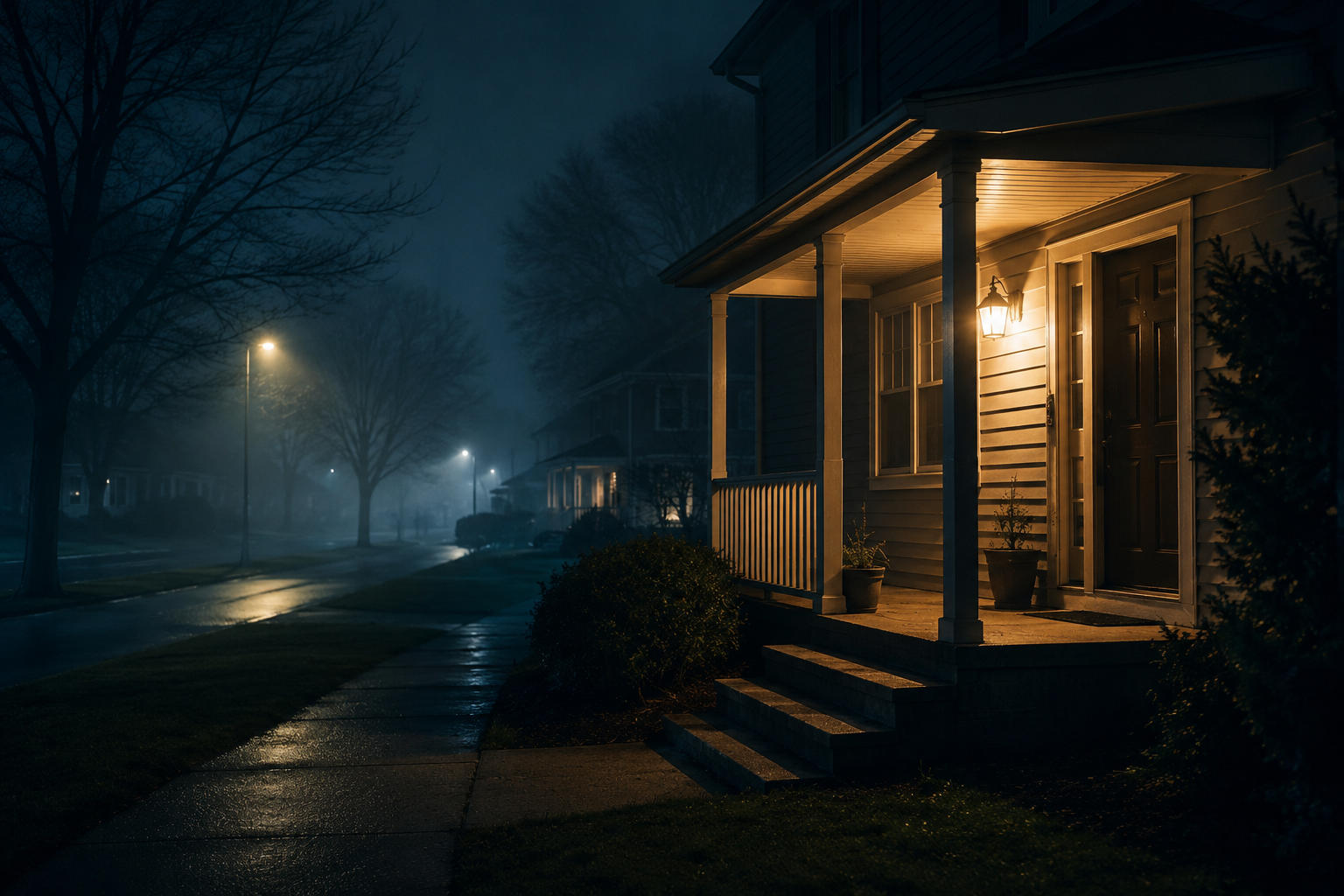
I know you are going to hate me when you hear this, and honestly, I do not blame you at all. Maybe I deserve every bit of whatever you are about to think about me. I always prided myself on being observant, on noticing the little things that everyone else was too busy or too self-absorbed to catch. Arthur lived four houses down from me in our little Oregon neighborhood, right past the bend where the old cedar tree drops needles all over the asphalt. For twenty-four months, his back porch light clicked on at exactly 9:47 PM. Never earlier, never later. It was like clockwork. I used to sit on my own back deck with a lukewarm glass of tea and chuckle to myself, thinking it was creepier than any horror movie on Netflix. I made jokes about it to my sister on the phone, telling her Arthur probably had an atomic clock hooked up to his lightbulb just to mess with the neighbors. I never walked down there. I never knocked on his door to say hello, or to ask why a grown man needed his back patio lit up like a landing strip at ten to ten every single night. I just watched it from afar, treating his private life like some kind of free evening entertainment.
The trouble started on a Tuesday night last month. I was sitting in the exact same spot on my deck, staring down toward Arthur’s yard, waiting for the familiar yellow glow to pierce the growing dark. The digital clock on my microwave downstairs read 9:48 PM, but the yard was pitch black. I figured maybe the bulb burned out. People’s bulbs burn out all the time, right? But then Wednesday night came and went, and it was dark again. Thursday night, still dark. By Friday, a weird kind of itch started at the back of my neck. It was stupid, but I felt oddly invested in that light. It had become part of my routine, this silent marker that told me the world was spinning the way it was supposed to spin. I told myself I was just being a good neighbor checking in on an elderly resident, but the truth is I was just nosy. I walked down the gravel driveway, stepping around a pile of damp leaves, and climbed the three wooden steps to Arthur’s back door. The screen door was rusted at the bottom hinge and squeaked horribly when I pulled it open. I knocked twice, my knuckles hitting the hollow wood of the door, and waited in the humid evening air.
Footsteps shuffled on the linoleum inside, slow and uneven, like someone dragging a heavy slipper across the floor. The lock turned with a loud click, and the door swung open about six inches. An elderly woman stood in the dim hallway, holding a faded floral cardigan wrapped tight around her narrow shoulders. Her white hair was pinned up in a messy bun, and her eyes looked like they had not seen a decent night’s sleep in years. This was Arthur’s mother, Clara. I had seen her around town maybe twice, pushing a metal grocery cart with a broken wheel, but I never knew her name. She stared at me through the crack in the door, her expression totally blank, not even surprised to see a stranger standing on her porch at nearly ten o’clock at night. I stumbled over my words, feeling suddenly foolish and intrusive. I pointed vaguely toward the empty light fixture overhead and stammered out some excuse about wondering if she needed a new bulb or if everything was alright. She did not yell at me. She did not tell me to get off her property. She just looked down at the floorboards for a long second before looking back up into my eyes.
“Arthur passed away three months ago,” she said, her voice dry and thin as paper.
My stomach did a hard, ugly drop, but I stayed right there on the mat. I did not know what to say to that. I opened my mouth, but no sound came out, so I just stood there like an idiot. Clara kept talking, her voice remarkably steady, almost like she had practiced telling this story to the empty walls. She told me he died right there in the front bedroom, in his sleep, at 9:47 PM. Three months to the minute before I started wondering about the light. She explained how the house had felt too big and too quiet after the paramedics left and the ambulance taillights faded down the street. She told me about the silence that settled into the drywall, a heavy thing that pressed down on her chest until she could barely breathe. So she started doing it herself. Every single night at twenty-four minutes to ten, she would shuffle out to the back hallway and flip the toggle switch up, keeping his schedule alive because she could not bear the thought of his routines dying before she did. She looked at me with those tired, watery eyes, and I felt like the most selfish person on the entire planet. I had been sitting on my deck, treating her grief like a quirky neighborhood joke.
“I asked her why she stopped last week,” I whispered into the quiet space between us.
Clara did not look away from me. A strange, fragile little smile touched the corners of her mouth, softening the deep lines carved into her face by months of heartbreak. She reached out and rested her pale, trembling hand against the wooden doorframe, steadying herself.
“I finally slept through the whole night without waking up missing him,” she smiled and said. “I think that means something.”
Those were the exact words she said to me. She didn’t dramatic pause for effect. She didn’t cry. She just said it with this terrible, quiet finality, like she was announcing the weather. I muttered some weak, pathetic condolences, told her if she needed anything at all she should just call, and then I backed away from her porch like a coward. I walked back down her gravel driveway with my head down, my shoes crunching loudly on the stones. I got back to my own deck, sat down in my chair, and stared down the dark stretch of lawn toward Arthur’s back door. The light was off. It stayed off. And the terrible part, the part that keeps me awake now long after midnight, is that I am the one who noticed. I am the one who went looking for answers. I broke her routine just by showing up, and now she is sleeping through the night because a stranger reminded her that the rest of the world has already moved on and forgotten her son is gone.