I know you are going to hate me when you hear this, and honestly, I do not blame you at all because my own brother would not even look me in the eye at Sunday dinner when he heard what I did with that fish.
I am the one who sat on the bank by the old mill every single morning for fifty-two years without so much as a bluegill biting my hook, and I am the one who threw away forty-eight hundred dollars in cash because I got a foolish notion in my head about the way the world ought to be.
People around Rogersville called me soft in the head long before that Tuesday, and maybe they were right, but I want you to understand the way the mist sits on the water just before dawn when the fog is thick enough to chew on.
My knees have been bad since the winter of ninety-eight, and walking down that dirt track from the gravel road to the river took me twelve minutes by the pocket watch my daddy left me.
The bank was always steep right there where the willow tree leaned over like an old woman with a bad back, dropping dead leaves into the brown current.
I used to sit on an upturned grease bucket with my knees drawn up to my chin because the damp would get right through my overalls and settle in my joints.
Every single morning at five o’clock I would bait that same old brass-eyed hook with a glob of dough-ball mixed with corn meal and cottonseed oil, and every single morning I would watch the sun come up over the ridge like a stale biscuit rising in a greasy skillet.
The boys from the hardware store would drive past on the bridge in their pickup trucks and honk their horns just to see me jump.
Billy Ray, who runs the bait shop down by the highway, used to leave a red plastic coffee cup on my porch every Monday with a note taped to the side that said, “Still nothing in that puddle, Amos?”
And he was right.
There was nothing in that puddle except old tires and rusted-out oil filters that the young fellows threw off the bridge when they had too much moonshine in them.
My wife Clara passed away back when the dogwoods were blooming in two thousand and four, and after she went, that river was the only thing I had left that did not talk back or ask me where I put the spare spark plugs.
I reckon I spent more on red and white bobbers over the years than that old wooden boat was worth, but a man has to have somewhere to go when the kitchen starts feeling like a box they forgot to nail the lid on.
That Tuesday was different from the start because the air did not smell like coal smoke from the valley; it smelled like wet cedar and copper pennies, the way it used to smell back when we were kids running bare-legged through the creek beds before they dammed up the fork.
My hands were shaking worse than usual while I tied the leader onto the line, and I dropped my pocket knife right into the mud where it sank three inches deep before I could grab for it.
I had to dig it out with my thumbnail, and by the time I got the blade cleaned off on my thigh, my trousers were stained black with river silt that never did come out in the wash.
The water was dead still, not a ripple on it, like a sheet of gray window glass laid out flat between the sycamores.
I cast the line out about twenty feet past the submerged stump where the old paddle-wheel used to sit before the flood of seventy-seven tore the mill apart.
Then I sat back down on my grease bucket, pulled my wool cap down over my ears because the wind was coming off the ridge with a bit of a bite, and waited for the morning to pass the way it always did.
Ten minutes went by.
Then twenty.
I took out my thermos of chicory coffee and drank two sips before it went cold on my tongue, tasting bitter and thin like boiled bark.
I was just thinking about packing it in and walking back up the hill to fry up a strip of salt pork when the rod tip jerked so hard it nearly pulled the whole business right out of my hands.
It was not a snag on a sunken root because a root does not pull back with the steady, heavy throb of something that has blood pumping through it.
I grabbed the cork handle with both hands, my knuckles turning white against the varnish, and dug my heels into the mud so I would not slide down into the drink.
“Now hold on,” I said out loud to myself, because my heart was hammering against my ribs like a trapped bird trying to get through a screen door.
The line hissed through the water, cutting a sharp white V across the gray surface, heading straight out toward the deep hole where the old bridge pilings stood under fifteen feet of green water.
I leaned back until my spine cracked, putting every ounce of weight I had left in my old shoulders into keeping that fish from wrapping the line around a submerged oak branch.
My arms felt like they were full of hot sand, and the skin on the palms of my hands was burning where the nylon cord was biting through the calluses.
“You ain’t getting away,” I muttered, gritting my teeth until my jaw ached right up into my temples.
The water boiled up about ten yards out, and I saw a flash of silver-green skin as broad as a lard bucket turn over in the sunlight that was just then topping the ridge.
It was a muskie, and not just any muskie, but a monster of a thing with a head like an alligator and fins that looked like wet silk.
I hauled back on the pole, stepping one foot down into the water until my boot filled up with cold mud, but I did not care because my whole world had shrunk down to the pull of that fish against my wrists.
The fight went on for twenty minutes, back and forth across the channel, until my breath was coming in ragged gasps that sounded like an old pump with a dry leather valve.
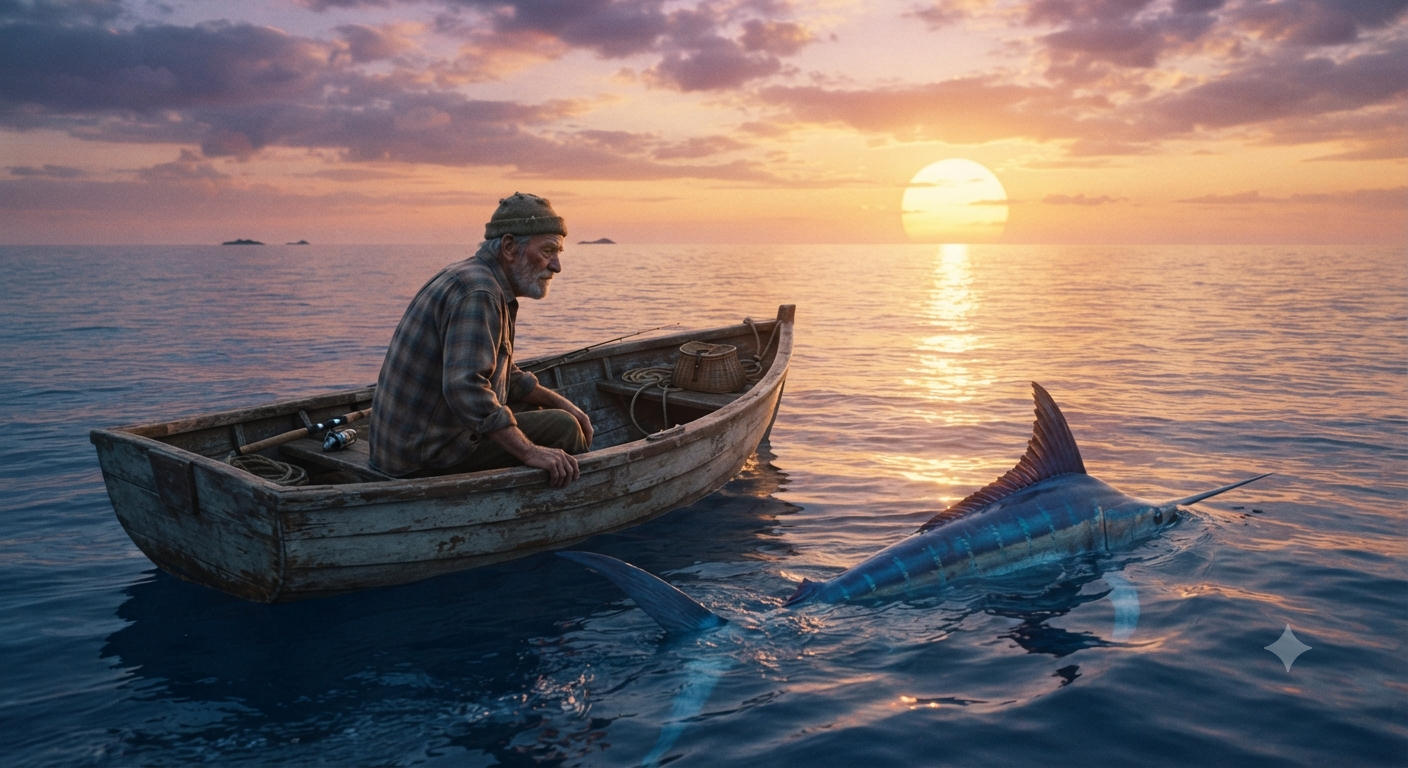
Finally, I dragged it into the shallows by the bank, sliding it up over the mud until it lay there panting with its great round eye staring right up at me like a yellow marble.
It was nearly four feet long, covered in dark tiger stripes that shimmered in the morning light like polished brass and emeralds.
I fell to my knees in the wet clay, my breath rattling in my chest, and reached out with a trembling hand to touch the side of its thick, cold body.
“Well, look at you,” I whispered, my voice sounding like dry corn husks rubbing together in the wind.
That was when the boy came down the path from the county road, carrying his schoolbooks in a brown paper sack rolled tight at the top.
His name was Toby, and he was the grandson of old man Henderson who used to run the blacksmith shop before they paved the road over with asphalt.
He stopped dead in his tracks about ten feet from the water, his mouth hanging open and his eyes wide as saucers as he looked down at that fish lying in the mud between my boots.
“Mister Amos,” the boy breathed, taking a slow step closer as if he thought the thing might grow wings and fly away. “That is the biggest muskie caught in this county since my granddaddy was a boy.”
I sat back on my heels, wiping the sweat off my forehead with the back of my dirty sleeve, and looked from the boy’s face down to the long, powerful flank of the fish rising and falling with every breath it took.
“It’s a big one all right, Toby,” I said, my voice shaking a little more than it had a minute ago.
“You could take that down to Knoxville,” the boy said, his eyes shining with a kind of hungry excitement that only twelve-year-olds have for things that cost money. “Old man Miller at the hotel would give you fifty dollars for the skin alone to hang in the lobby, and the meat would feed half the families down on Mill Street.”
Fifty dollars was more than my property tax for the whole quarter, and the thought of it sat in my head like a warm stove on a freezing night.
I could see myself walking into the county courthouse with a roll of bills thick enough to choke a calf, paying off the grocery bill at the Merc, and maybe even buying a new set of tires for the truck that had been sitting on cinder blocks behind the shed since the Carter administration.
I reached down and grabbed the wire stringer from my tackle box, my fingers brushing the rusty metal snap.
The fish gave one last slow heave of its tail, kicking up a spray of muddy water that hit the toe of my boot.
It didn’t fight anymore because it knew as well as I did that the game was done, and its great round eye stayed fixed on mine with a terrible, patient stillness that made me feel small and dirty in my old clothes.
“Go on then, Mister Amos,” Toby urged, stepping right down into the mud beside me and reaching for the leader. “Let’s haul it up to the road before it dies on us.”
I looked at the boy’s small, thin hands, and then I looked back down at the water where the current was swirling past the willow roots, clear and cold and ancient.
“Why?” I asked him, though I wasn’t rightly sure who I was asking.
The boy blinked, pulling his hand back like he’d touched a hot skillet. “What do you mean why? So you can sell it. You ain’t caught a fish in fifty years, Amos. You earned this one.”
I let go of the stringer, and the metal clinked against the stones in the bottom of the boat like a dry bone dropping on a cellar floor.
I reached down with both hands, sliding my palms underneath the heavy, cold middle of that fish, feeling the hard muscle bunching up under the skin like coiled steel springs.
“Because,” I said, and my voice sounded thin and far away even to my own ears, “I’ve caught nothing for fifty years. But I’ve never lost the wonder. That fish was a miracle. And I couldn’t steal a miracle.”
With one heave, I lifted the great beast up and swung it out over the mud into the deep water by the stump.
It hit the surface with a heavy slap that sent a ring of dark water all the way out to the middle of the river, and then with a single flick of its tail that threw a spray of silver drops into the morning sun, it was gone into the green depths.
Toby stood there with his mouth open, staring at the empty circle where the water had closed over the top of it, not saying a word for a long time.
The woods behind us were quiet except for a bluejay screaming from the top of an oak tree, and the smell of the damp river mud rose up around us like church incense on a rainy Sunday.
“You’re a crazy old man, Amos,” the boy finally whispered, and then he turned around and walked back up the path without looking at me again.
I stayed there on my grease bucket until the sun got high enough to burn the mist off the water, watching the place where the fish had gone down, knowing the folks at the diner would laugh themselves sick when Toby told them what I’d done with forty-eight hundred dollars.
My hands were still shaking while I wound the nylon line back onto the spool, and the hole in my pocket felt bigger than it ever had before.
I picked up my pole, tucked the empty thermos under my arm, and started the long, slow climb back up the hill toward the road without once looking down at the water.