
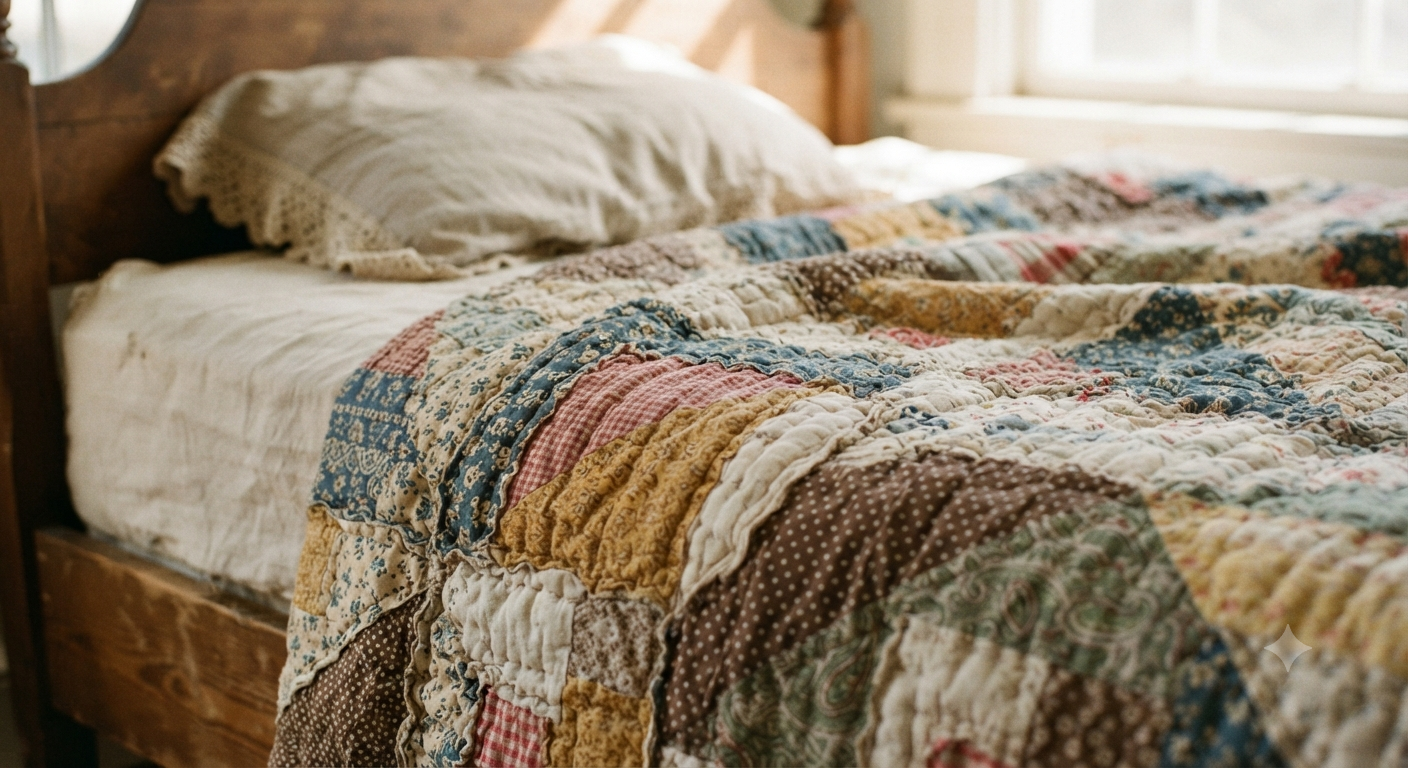
I was wrong about what that old trunk in the back of the garage was meant to hold, and I admit it right here because keeping that secret for thirty years didn’t protect anybody.
When Maeve dragged the heavy canvas bundle into the center of my linoleum kitchen floor last Tuesday, she didn’t even knock. She just dropped it with a dull thud that made my ceramic sugar bowl rattle against the counter. She was twenty-four, loud-mouthed, and wearing her mother’s old work boots with the laces tied crooked. I had been sitting at the table nursing a cup of black coffee that had gone cold twenty minutes prior, watching the dust motes drift through the weak afternoon light coming off the desert flats outside Bakersfield.
“You’ve been avoiding this corner for three years, Grandma,” Maeve said, kicking the bundle with the toe of her boot. “Time to air it out.”
I didn’t answer her right away. I took a slow sip of that bitter coffee and stared down at the blue oilcloth table runner instead. That trunk had sat in the damp corner of my garage through four different roofing jobs and two separate dog burials, locked tight with a brass padlock that hadn’t seen a key since my mother drew her last shallow breath back in nineteen-ninety-four. My mother, Clara, had left it to me with strict instructions that I didn’t care to follow back then. I had shoved it behind a stack of spare cedar fence pickets just to get it out of my sight.
“It’s just a bunch of old rags, Maeve,” I said, my voice sounding drier than I meant it to. “Leave it be.”
“Rags don’t weigh forty pounds,” she muttered already flicking at the old leather straps with her thumbnail.
Three weeks earlier, I had told the local repairman that things wear out because we let them, not because they’re meant to break. I was talking about my kitchen faucet, but I was really thinking about the way my daughter Nora and I stopped speaking after the funeral down in Ridgecrest. Nora had packed her Plymouth Valiant with three cardboard boxes and a half-empty jar of peach preserves, backed out of my gravel drive without waving, and hadn’t called me once in fourteen years. Not for my seventy-fifth birthday, not when I had the hip replacement, not even when the old pepper tree in the front yard finally gave up and split down the middle during the windstorm of 2011.
Maeve didn’t listen to me, of course. She never did, which was probably why I let her come over twice a week to yell at me about my cholesterol and check my mail. With a sharp snap of rusted brass, the old padlock gave way. She heaved the lid back on its squeaking iron hinges and a smell rolled out that hit me right behind the eyes. It wasn’t mothballs. It was old cedar shavings, sun-baked cotton, and that specific damp scent my mother’s apron always had when she pulled the cast-iron skillet off the wood stove at five in the morning.
“What is all this?” Maeve breathed, reaching her hand down into the shadows.
She pulled out a long strip of faded navy wool, frayed at the edges where someone had hastily snipped it with sewing shears. I knew that piece before she even held it up to the light. It was the hem of my father’s winter coat, the one he wore every single day he walked down to the rail depot to load crates of alfalfa. He wore that coat until the elbows were completely bald and my mother had to patch them with scraps from an old feed sack.
“That was your grandfather’s,” I whispered, feeling a strange tightness in my throat that I hadn’t invited.
“And this?” Maeve pulled out a square of bright yellow gingham with a grease stain right near the corner.
“My first real dress,” I said, leaning forward against the edge of the table. “I wore it to the county fair the summer I turned sixteen and thought I knew everything about the world.”
The kitchen grew very quiet except for the hum of the old Frigidaire refrigerator in the corner fighting a losing battle against the July heat. Maeve didn’t say another word. She just kept pulling things out, piling them on my clean floor like she was unearthing bones at an archaeological dig. There was the pink flannel square from the receiving blanket Nora had been wrapped in the night she was born in the county hospital. There was the dark green corduroy from the trousers my husband Dale wore the day we signed the mortgage on this very house.
Piece by piece, patch by patch, my whole life was sitting there in a heap of mismatched fabric. My mother hadn’t saved those clothes because she was sentimental. She saved them because she knew that sooner or later, a person runs out of things to hold onto and needs something heavy to keep the cold wind out.
“She spent three years sewing this together after the stroke,” I said, my voice dropping down to almost nothing. “And I told her it looked like a beggar’s blanket.”
Maeve looked up from the floor, her eyes wide and sharp behind her wire-rimmed glasses. She didn’t offer any cheap comfort or tell me it wasn’t my fault. She just held up a square of checkered cotton that I hadn’t seen since the morning Nora packed her car.
“You knew she made this for you, didn’t you?” Maeve asked.
“I knew,” I said.
Three days later, I was sitting on the front porch with my old wicker basket and a pair of dull silver scissors when a rusted Ford pickup turned down my gravel drive and kicked up a gray cloud of dust that settled over the dry oleander bushes. A woman stepped out of the passenger side, her hair pulled back into a messy graying bun, wearing a faded denim shirt that looked three sizes too big. She stood by the bed of the truck for a long second, staring at the screen door like she wasn’t sure the hinges would hold if she pushed them.
It was Nora. She didn’t look like the girl who left in the Valiant anymore, but she had the same stubborn set to her jaw that I saw every time I looked in the mirror.
Neither of us moved for what felt like an hour, though the clock on the dashboard of the Ford was probably only ticking off forty seconds. The wind rustled through the dead leaves in the gutter, and somewhere down the road a stray dog barked twice at nothing. My fingers were stiff around the handles of the scissors, but I didn’t put them down.
“Maeve called me,” Nora said, her voice rough from the dust and the long drive up from the valley.
“She tends to meddle,” I replied.
Nora took two slow steps toward the porch stairs, her boots crunching loud against the loose limestone. She didn’t smile, and she didn’t drop her eyes. She just looked at me the way people look at an old fence post that has finally started to lean after forty winters of bad weather.
“She said you finally opened the trunk,” Nora said.
“I did.”
“Was it as ugly as you remembered?” Nora asked, and for a second there was that old familiar spark in her voice that told me she was my blood whether I liked it or not.
I looked down at the lapful of scraps I had been sorting through all morning, trying to find a clean edge to start over with. Some quilts aren’t meant to keep you warm on a bitter night. Some of them just sit there on the back of the sofa, heavy and awkward and full of wrong stitches, reminding you of every person you ever let walk out the front door because your pride was too loud to let you say you were sorry.
“It’s the only thing left in this house that doesn’t smell like dust,” I said.
Nora walked up the first two steps, her hand sliding along the wooden railing until her knuckles brushed against mine. She didn’t hug me, and I didn’t reach out to grab her. We weren’t the kind of women who made a fuss over things once the damage was already done.
“Well,” Nora said, her voice dropping down an octave as she looked past me into the dark hallway. “Are you going to let me inside, or do I have to stand out here on this hot porch all day?”
“The screen door is unlatched,” I told her, folding the blue wool square over my knee. “Bring those boxes in from the truck before the sun gets any higher.”