Three seasons of dead squash vines and brown tomato stalks will teach you a lot about how stubborn dirt can be when you do not know how to talk to it.
After Arthur passed away in the back room of the house on Montgomery Street, I inherited his vegetable patch like someone being handed a set of keys to a car they never learned how to drive. Arthur had spent forty years keeping those four raised beds as neat as a church pew, his hands always stained with dark loam and tomato leaf oil. When he went quiet in his sleep at sixty-eight, the heart just packing it in after too many years of heavy lifting down at the brickyard, I figured keeping his garden going was the only way I could prove to myself I had been a decent wife.
I was wrong about that, just like I was wrong about a hundred other things.
The first spring, I bought thirty dollars worth of Early Girl seedlings from the feed store down by the creek. I dug the holes three inches deep, just like I had watched Arthur do every May since we moved up from Newburgh. I watered them at seven every morning, hauling the green plastic can back and forth from the spigot until my lower back started throbbing in that familiar, punishing way.
“You’re drowning them, Clara,” Bea said one Tuesday morning. She was leaning over the chain-link fence that divided our yards, her silver hair pinned back with a yellow plastic clip she must have worn since the seventies. Bea had lived next door since Eisenhower was in office, and she missed nothing. “Arthur didn’t flood his beds. He coaxed them.”
“They look thirsty,” I said, wiping a streak of wet mud off my forehead with the back of my gardening glove.
“They look drowned,” Bea said, shaking her head. “A plant won’t drink if it’s choking. Same as a person.”
I didn’t listen to her. I kept hauling that water every single morning, convinced that if I just worked hard enough, the dirt would reward me for my trouble. By July, every single stem had turned black at the base and keeled over into the mud like broken toothpicks. Not a single red tomato. Not even a green one to show for sixty days of sweat.
The second year, I tried sweet corn. I bought the yellow label seeds, tilled the soil until my arms felt like lead, and sprinkled lime all over the surface because the soil test kit from the hardware store said the pH was off by half a point. I waited for shoots. I waited for weeks. Nothing came up except crabgrass and dandelion greens with roots as thick as my thumb.
I remember standing out there in the July heat, wearing Arthur’s old flannel shirt with the sleeves rolled up to my elbows, looking down at the cracked, gray crust of the earth. The sky over the Hudson was that flat, heavy slate color that usually meant a summer storm was stalling out over the ridge. My chest felt tight, the way it always did when I sat too long in the kitchen by myself and started listening to the refrigerator hum.
“You’re fighting the ground, Clara,” Bea called out again. She was shelling butter beans on her back porch, her thumb moving with that fast, dry clicking sound against the aluminum bowl. “You’re trying to grow things Arthur wanted in a dirt that belongs to you now.”
“It’s the same dirt,” I yelled back, my voice sounding sharper than I meant it to. “It’s five feet from his tomatoes.”
“The dirt remembers who’s standing over it,” she said softly, not even looking up from her lap. “And right now, it knows you’re mad at him.”
I wasn’t mad at Arthur. At least, I told myself I wasn’t. But lying awake in that double bed with his side still flat and cold under the quilt, feeling like a guest in my own bedroom, made something bitter settle behind my ribs. He had left me with a house that needed a new roof, a truck with a slipping transmission, and forty-three tomato stakes that looked like gray gravestones poking up out of the weeds.
That was when I gave up on the vegetables and decided to try flowers instead, thinking maybe they weren’t as proud as corn. I bought three flats of marigolds from the discount rack outside the grocery store. They were root-bound and yellowing around the edges, fifty cents a pack, looking like they were ready to give up before they even hit the ground.
I didn’t even bother digging proper trenches. I just jammed them into the hard earth along the edge of the patio with a rusted trowel, not caring much if they lived or died.
“What are those?” Bea asked, walking over to the fence line with a pair of garden shears in her hand.
“Marigolds,” I said, wiping my palms on my jeans. “Stupid things. They’ll probably be dead by Saturday.”
“Arthur would have laughed at those,” Bea said. She squinted through her thick glasses at the scrawny little yellow blooms. “He hated marigolds. Said they smelled like old socks.”
“Well, they’re cheap and they don’t need a lecture,” I snapped.
Bea didn’t get mad. She just stood there for a minute, her hand resting on the top of the fence post where the green paint had peeled off down to the gray wood. “You should plant what he loved, honey. Not what’s easy.”
“He loved tomatoes,” I said. “And they died.”
“He loved beefsteak tomatoes and sweet corn, sure,” Bea said. “And he loved those purple clematis vines he spent three years trying to get to climb the side of the garage before his knees went out. You remember those?”
I did remember them. Arthur had spent every Sunday afternoon in the spring of nineteen-ninety-eight kneeling by the clapboards with a spool of green twine and a handful of small staples, cussing under his breath every time the wind whipped the fragile shoots loose.
“They died too,” I muttered. “Everything dies around here.”
“Because you’re waiting for them to,” Bea said quietly. She turned back toward her porch, her slippers making a soft scraping sound against her concrete slab. “Love is fertilizer, Clara. He may be gone, but his love is still in the soil if you’d just stop packing it down so hard.”
I stood there by the patio for a long time after she left, watching a single blue jay hop along the top of our wooden fence. The sun was dropping behind the trees on the west side of the river, throwing long, crooked shadows across the dead garden beds. My hands were stained dark with dirt and dried sap, the skin around my fingernails cracked from the dry wind.
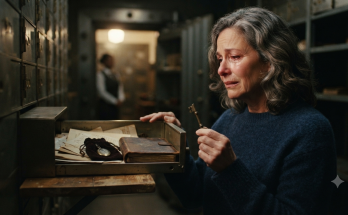
I went inside and sat at the kitchen table without turning on the overhead light. The house was quiet in that heavy, ringing way it got every evening around six o’clock. I opened the bottom drawer of the old oak desk where Arthur kept his seed packets and his cedar-handled pruning shears.
Underneath a stack of old electric bills from nineteen-ninety-six, I found a small brown paper envelope tied shut with a piece of faded green garden twine. My name was written on the front in Arthur’s slow, careful block letters, the kind of handwriting he used when he was filling out shipping manifests down at the dock.
*For when you’re ready to stop fighting the dirt,* it said inside, written on the back of an old receipt from the hardware store.
I didn’t open it right then. I held it between my fingers, feeling the dry, rustling weight of whatever was inside pressing against the paper. My heart wasn’t racing or doing anything dramatic, but my throat felt tight and dry, like I had swallowed a mouthful of dust.
The next morning, before the sun had cleared the top of the Methodist church steeple three blocks over, I was back out in the garden with Arthur’s old shovel.
I didn’t water the dead tomato stakes. I didn’t yell at the crabgrass. I started at the north corner of the bed where the soil was the hardest, driving the iron blade down with the heel of my boot until it hit something solid.
*Clack.*
I dropped to my knees right there in the damp morning mud, not caring that my jeans were getting soaked through at the knees. I clawed at the dirt with my bare fingers, throwing the heavy black earth aside until my nails hit rough wood.
It wasn’t a rock. It was a small cedar box, about the size of a shoe box, with a brass latch that had gone green with verdigris over the years.
My hands were shaking so hard I dropped the latch twice before I managed to flip it open. Inside wasn’t money or old jewelry or any of the things people keep in secret boxes. There were three packets of heirloom purple clematis seeds, a rusted pocketknife with a white bone handle, and a folded piece of lined notebook paper covered in Arthur’s uneven handwriting.
*Clara,* it said, right there under the morning dew. *If you’re reading this, I’m out in the shop or down by the river, and you finally got tired of killing my tomatoes.*
I sat back on my heels in the middle of that dead garden, the cold mud soaking through my clothes, and I finally started to cry. Not the quiet, polite crying I had done at the funeral home while people patted my shoulder, but the loud, messy kind that makes your chest ache and your nose run.
I stayed there on the ground until the sun came up over the fence and warmed the back of my neck.
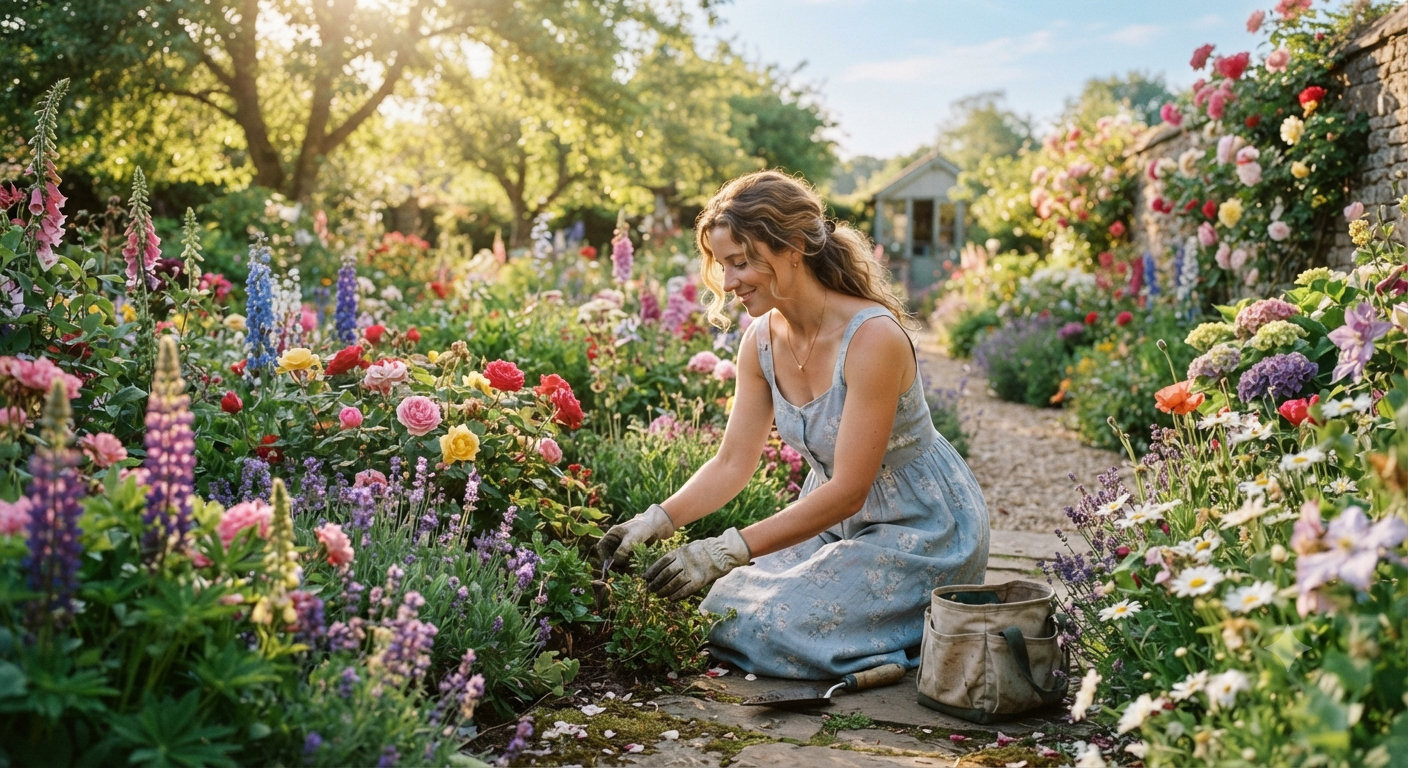
By the following spring, the purple clematis was climbing three feet high up the side of the garage, thick and green and stubborn as anything you ever saw, holding onto the weathered wood with a thousand tiny, tight-fisted curls.