I was wrong about what kind of trash people leave behind on public park benches, and I admit it right here because ignoring the truth for three days is something I had to carry. I always figured it was candy wrappers or wet newspapers left by someone who just didn’t care enough to walk four extra steps to the green wire barrel by the gravel path.
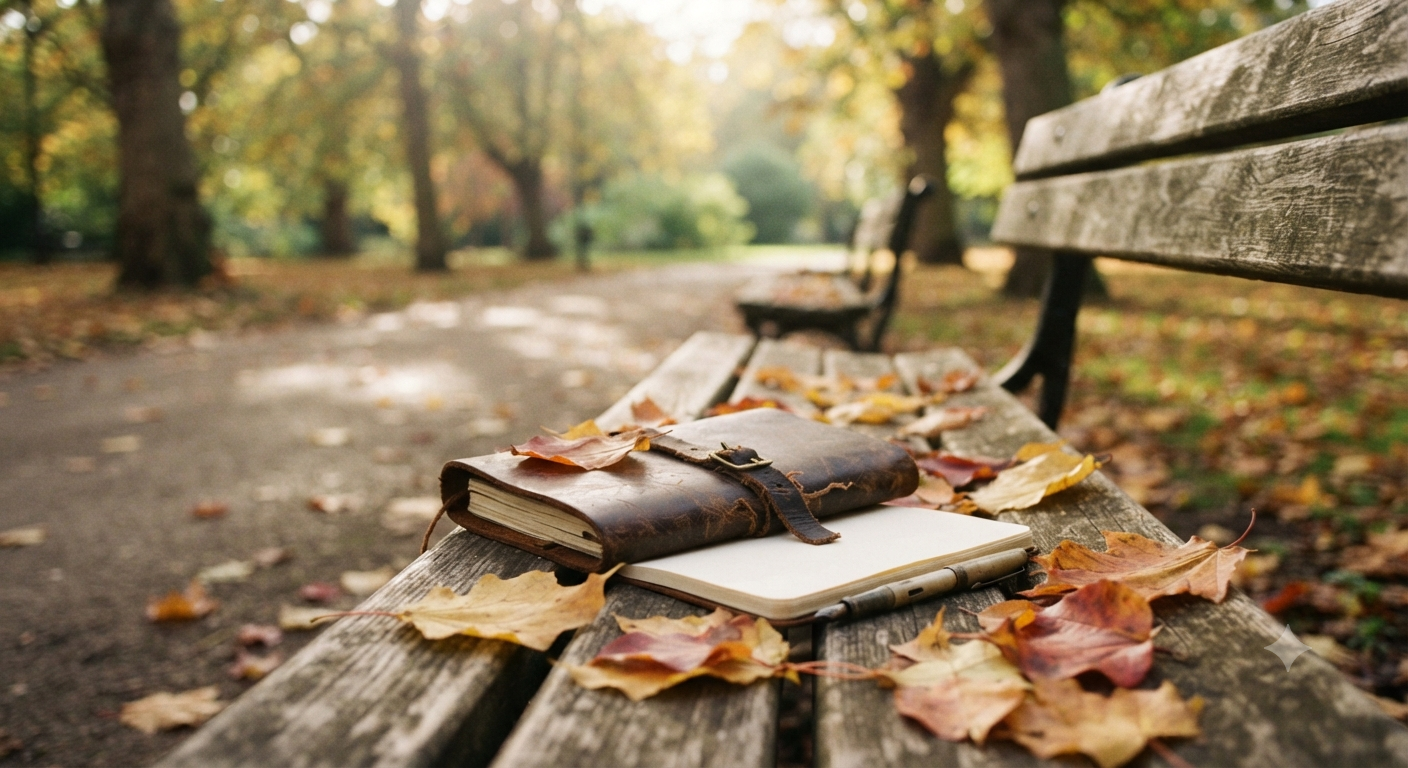
The bench was the second one down from the stone fountain in Riverview Park, right where the maple tree drops those sticky yellow pods every September. My boots were soaked through the soles from the morning dew when I sat down to catch my breath after three miles of walking. The park was dead quiet at 6:15 AM on a Tuesday, just me and a stray calico cat picking through some old mulch by the hedges.
That was when I saw the blue spiral notebook jammed down between the wooden slat and the iron armrest. It wasn’t brand new. The cardboard cover was warped from damp air, and the metal coils at the top were bent flat like someone had shoved it into a backpack in a hurry. My name is Martha, and I run the alterations desk down on Mill Street, so I notice when things are made poorly or treated rough.
I picked it up mostly to put it in the trash can so some kid wouldn’t kick it into the mud. But then I saw the first page. It wasn’t math homework or a grocery list. It was just a date from three years back and one sentence written in purple ballpoint pen that pressed so hard the paper was torn right through.
“I don’t know how to wake up tomorrow without feeling like lead,” it said.
I sat there on that damp bench for twenty minutes while the sun cleared the top of the old brick textile mill across the river. I didn’t mean to keep reading, but my fingers just turned the page. And then the next one. It was like walking into a stranger’s dark house and finding every light switch turned off. Page after page of small, neat handwriting detailing a teenage mind coming apart at the seams. There were notes about skipping school, fights in the kitchen over burnt toast, and the heavy, crushing weight of living in a town where everybody knows your last name and nobody asks how you actually are.
By page forty, my chest felt tight. I kept thinking about my own niece Clara, who lives over in Altoona and won’t answer her phone half the time. The girl who wrote this notebook wasn’t just venting. She was bleeding onto the college-ruled lines. There were sketches of pills, lists of reasons to stay in bed, and desperate little margin notes asking if it ever stops hurting to breathe.
The last entry in the middle of the book had a date from six months ago. “If anyone finds this, just throw it in the river where nobody has to look at it.”
I shoved the notebook into my canvas tote bag and walked home so fast my shins burned. I spent the rest of the morning staring at the blue cover while the shop stayed locked up. I didn’t open the alterations window at nine. I just sat at my kitchen table with a cold cup of coffee and read the whole thing cover to cover, every single word of pain that girl had put down on paper when she had nobody else to talk to.
By three o’clock that afternoon, I did something I hadn’t done in ten years. I logged onto Facebook.
I typed out a post on my personal page, my fingers clumsy on the keyboard because I’m not one for social media drama. “Found a blue spiral notebook on the bench by the fountain in Riverview Park,” I wrote. “I know who wrote this isn’t my business, but if this belongs to you or your daughter, please message me. It’s safe here.”
I didn’t expect anything to come of it. People lose things in parks every day and most of the time they just buy a new one and forget about it. But town gossip travels faster than a freight train on the PRR tracks. By Wednesday night, my notification light was blinking every two minutes while I was trying to eat a bowl of soup.
My niece Clara called first. “Aunt Martha, what are you doing posting about a diary online? People are sharing it all over the county groups.”
“Somebody dropped it, Clara,” I told her, stirring my spoon around the broth. “It’s important.”
“You shouldn’t be reading other people’s business,” she said.
“Somebody had to,” I said, and hung up.
The message came through Thursday morning around eleven while I was hemming a pair of heavy wool trousers for old man Geter. It was from an account with a name I didn’t recognize, just a clean profile picture of a young woman with short dark hair standing in front of a brick building with a sign that said community health center.
“That was my diary,” the message said.
My fingers hovered over the glass screen of my phone for a long second before I typed back. “Are you sure?”
“I’m sure,” she replied two minutes later. “The blue cover has a coffee stain on the bottom right corner from when my brother spilled his mug in the kitchen back in twenty-twenty. I wrote it when I was down at the bottom. I’m okay now. I didn’t want to lose it. It reminds me of how far I’ve come.”
We agreed to meet at the diner on the corner of Pine and Fourth at noon. It was raining by then, that steady Pennsylvania drizzle that makes the whole town look like it’s painted in shades of gray slate. I sat in the corner booth with the blue notebook wrapped in brown paper bag material sitting right between my water glass and the napkin dispenser.
The door chimed, and a young woman walked in shaking out a black umbrella. She had kind eyes behind thin wire glasses and a green canvas jacket that smelled like damp wool. She scanned the room twice before she spotted me sitting alone in the booth.
She walked over and stood by the table for a moment, her hands tucked deep into her coat pockets. Neither of us said anything for five seconds, and honestly that silence felt heavier than the whole notebook.
“Are you Martha?” she asked. Her voice was steady, but her lower lip gave a tiny twitch.
“I am,” I said. I slid the brown-wrapped package across the formica tabletop. “Sit down.”
She didn’t open it right away. She just rested her palm flat against the paper like she was touching something fragile that might break if she pushed too hard.
“I wrote that during my junior year,” she said softly, her gaze fixed on the salt shaker. “I thought about burning it a hundred times.”
“Why didn’t you?” I asked.
She looked up then, and the dark circles under her eyes told me she knew more about the hard parts of life than anyone her age has any right to know.
“Because if I burned it, I wouldn’t have proof that I survived it,” she said.
She told me her name was Maya. She told me she graduated from community college down in Pittsburgh last spring and now she works out of the county health office helping teenagers who are walking through the exact same dark hallway she was stuck in three years ago. She carries her old notebooks around in her tote bag like a badge, or maybe like a map of a minefield she finally learned how to navigate without losing a foot.
“I’m a counselor now,” she said, almost like she couldn’t quite believe it herself. “I show pages from that exact book to kids who tell me they can’t see a way out. I tell them I wrote those words right on this table.”
She didn’t cry. I didn’t either. We just sat there while the waitress came by and poured two cups of lukewarm coffee that we both left sitting on the vinyl.
Maya untied the brown paper, pulled out the blue notebook, and slipped it into her canvas bag right next to a thick stack of intake forms and a blue Bic pen. She thanked me with a short nod that had more grit in it than a dozen handshakes. Then she stood up, buttoned her coat, and walked out into the rain without looking back once.
I stayed in that booth for another twenty minutes watching the windshield wipers swish back and forth on the pickup trucks parked outside on Pine Street. My coffee went cold, and my own hands felt stiff and old against the plastic tabletop. Some things don’t stay lost because they were never meant to be thrown away in the first place, and I know that now better than I did on Tuesday. It cost me three days of peace and a whole lot of heavy thinking about people I’ll never really know, but I’m glad I picked it up off that bench.