The grease paper map was folded into quarters and tucked inside an old oil filter box on the top shelf of the garage. It had been sitting there since November of nineteen-eighty-two, right after they lowered my father into the red clay behind the Baptist church.
I was forty-four years old when I finally climbed up on that wobbly milk crate and reached for it. My hands were stiff from the morning frost on the steering column of my flatbed, and my knees made that dry clicking sound that lets me know the rain is coming before the barometer even moves.
Arthur had kept that garage as quiet as a church for twelve years after the stroke took him off the grading crews. I didn’t think much of the map when the paper first hit my calloused palm because Arthur had drawers full of old blue-line prints from the highway department.
He used to bring home scrap paper for us to draw on when my brother Caleb and I were small enough to share a twin bed. But this one didn’t have the standard county stamps or the red ink of the state surveyors in Bakersfield.
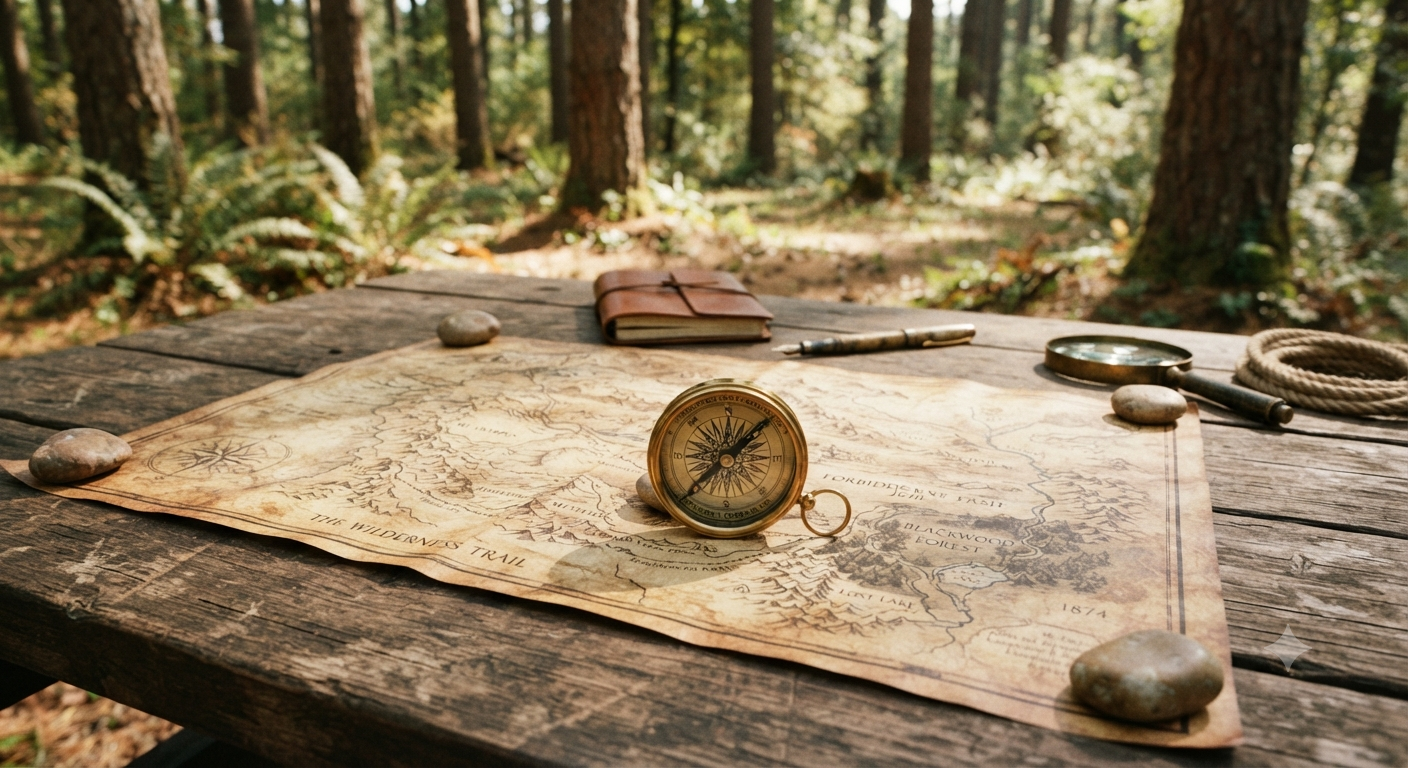
It was drawn in heavy carpenter pencil on the back of an old feed store receipt with the edges charred black. There were three crosses marked with small black triangles near the ridge where the old flume used to run above the creek.
I told myself I was just going up there to clear my head after the bank called about the third mortgage payment on the shop. Business down at the machine yard had been slow all winter, and the county had been dragging its feet on paying out the municipal tractor repairs.
My wife Martha told me I was chasing ghosts when I threw my canvas jacket into the passenger seat and reached for the ignition switch. She didn’t look up from her sewing basket when I slammed the door of the truck.
“You’re fifty-six years old, Virgil,” she said through the cracked screen door, her voice flat and dry as corn husks. “You can’t eat a map, and it’s not going to pay the parts supplier in Fresno.”
She was right, of course, but honesty never kept a man warm when the wind came whistling down out of the Tehachapi pass. I turned the key and let the diesel rattle until the oil pressure needle came off the peg.
The drive up the grade took forty minutes because the transmission in the Ford was slipping out of second gear whenever the load got heavy. I parked by the cattle guard where the county road turned into logging gravel and killed the engine.
The silence up there always felt different from the noise of the shop. It was the kind of quiet that made your ears ring if you stood still too long.
I didn’t bring a compass because I had walked those ridges with Arthur back when I was knee-high to a fence post. He taught me how to read the lay of the land by the way the live oaks lean away from the prevailing wind.
The map had a series of little dots leading from the old stone watering trough up through the manzanita brush. Each dot was spaced about twenty paces apart, marked with tiny hatch marks like he was counting off his own heartbeats.
I started walking, keeping my boots out of the wet clover so I wouldn’t track mud back into the truck. The ground was spongy from the late rains, and the smell of wet pine needles always brought back the taste of those peanut butter sandwiches Arthur used to wrap in wax paper.
He wasn’t much for talking when we were out working the lines. He would just point with the tip of his wooden rule and grunt whenever I missed a measurement by more than a quarter inch.
By the time I reached the third crossing, my shirt was sticking to my shoulder blades and my breath was coming short. I stopped by the stump of an old sugar pine that had been struck by lightning back when Eisenhower was in the White House.
The map showed a sharp turn to the left right behind that stump, heading down toward the dry wash where the gold-panners used to try their luck back in the depression. I pulled the folded paper out of my pocket and checked the mileage ticks.
Arthur’s handwriting was cramped and heavy-handed, the way it always got when he was trying to press through a hard layer of shale. The numbers didn’t make any sense in terms of feet or yards, though.
They were small, uneven digits that looked more like coordinates for an old drilling rig than property lines. I figured he had just been sitting at the kitchen table with a cold bottle of beer after a long shift, inventing some foolishness to pass the dark winter evenings.
The sun was dropping behind the ridge by the time I hit the cedar grove where the shade stayed cold all day. That was where the map ended, right at the base of a twin-trunked incense cedar with a deep lightning scar twisting down the bark.
I dropped to my knees in the wet needles and started clawing at the dark soil with my bare fingers. My fingernails filled with black dirt and pine resin right away, but I didn’t care because I could feel the hard edge of something buried just beneath the surface.
It wasn’t a tin can or an iron strongbox like the old-timers used to hide their whiskey in. It was a cigar box made of cedar, wrapped three times in heavy yellow grease tape to keep the mountain damp from getting inside.
My heart was hammering against my ribs like a trapped bird as I peeled the tape away with my pocket knife. The blade slipped once and bit into the meat of my left thumb, but the blood just mixed with the damp dirt on the lid.
I popped the rusted little brass latch with the tip of the blade and lifted the lid. Inside, sitting right on top of a folded stack of heavy bond paper, was an old brass compass with the glass cracked clean across the dial.
Beneath the compass was a single sheet of blue ledger paper covered in Arthur’s familiar, heavy ink. I unfolded it under the dim canopy of the cedar branches and started to read the words he had written back in the autumn before his heart gave out.
“Virgil,” he wrote, his hand shaking slightly toward the bottom of the sheet. “If you found this, you’re just as stubborn as I was about following a bad line.”
The wind moved through the high branches above me with a long, whistling sigh that sounded almost like someone clearing their throat in an empty room. I sat back on my heels and stared at the cedar bark until the details started to blur around the edges.
“I didn’t leave you any money in this box,” the letter went on, the ink slightly smeared where a drop of moisture had hit the page. “And there ain’t no gold out here in these hills no matter what the old men down at the diner told you.”
My throat felt tight and dry, like I had swallowed a mouthful of wood ash from the shop stove. I kept reading because there wasn’t anything else to do with the silence pressing down on me from the hills.
“I spent forty years drawing lines for other men so they could fence off their pieces of this earth,” Arthur had written. “Every map I ever made was just a cage to keep people from wandering off where they might get hurt.”
I thought about all those nights he stayed down at the courthouse basement, hunched over the heavy wooden tables with his green eyeshade pulled low over his forehead. He had looked so small down there among the county ledgers, surrounded by all those leather-bound books full of other people’s names and boundaries.
“This one doesn’t show you where the property starts or ends,” the letter said at the very bottom, right above his signature. “I wanted you to have an adventure that didn’t end with a deed or a mortgage.”
I didn’t cry right away. I just sat there in the wet clover with the open box in my lap, listening to the creek running down below the ridge like it had been doing for a thousand years before either of us ever walked up these hills.
Then I looked down at the compass in my hand, its needle spinning wildly toward the north before settling against a dead stop in the cracked glass. Arthur hadn’t left me a treasure.
He had left me the exact same empty road he had walked every day of his life, pretending there was something waiting around the next bend. I stood up slowly, brushing the damp red dirt off the knees of my work trousers, and tucked the grease paper map back into the pocket of my jacket.
The sun was gone by the time I reached the truck, leaving the valley below full of purple shadow and the orange glow of the highway lights down toward Bakersfield. Martha didn’t look up from her sewing when I walked through the screen door and dropped the empty cigar box onto the oilcloth kitchen table.
“Find your gold?” she asked, her voice as flat as the linoleum under my boots.
“No,” I told her, hanging my jacket on the brass hook by the back door where Arthur’s old coat used to hang before we cleared out his things. “Just a map.”
The next morning, before the sun had even cleared the top of the water tower down at the rail yards, I was back out at the drafting table in the corner of the machine shop. The linoleum was cold against my socks, and the small electric space heater in the corner was ticking as the metal coils warmed up.
I pulled a clean sheet of yellow tracing paper off the roll and weighted the corners down with a couple of heavy brass hex nuts from the parts bin. My oldest boy, little Virgil, was seventeen then and spending his weekends sleeping until noon instead of helping out with the lathe work.
I didn’t tell him about the cedar grove or the box under the tree or what Arthur had written on that blue ledger paper. I just dipped my technical pen into the black India ink and started drawing a new grid with roads that didn’t go anywhere near the county assessor’s office.
I drew a small cross near the creek where the old bridge used to be, and another one behind the gravel pit where we used to look for arrowheads when we were boys. I spent four solid hours getting the scale right, making sure the distances looked real enough to fool anyone who didn’t know the territory.
By noon I had the whole thing folded neatly into quarters, just like the one in the oil filter box, and tucked into the pocket of his school jacket where he wouldn’t find it until he went looking for his car keys. I told myself it was just a joke, something to get him out of the house for an afternoon so he’d stop tracking grease across my clean floors.
The shop phone started ringing around one o’clock with a parts order from the packing plant, but I let it ring until the machine picked up. I stood there looking out the small dirty window at the empty stretch of highway running south toward the state line.
I knew exactly what he would find when he reached the end of those pencil lines because I had spent forty years walking the same circle. Some men leave their boys a piece of land with a clear title and a well that never goes dry in August.
My father left me a map of nowhere, and I spent the rest of my life drawing the exact same lines for my own children. We stay up late at the kitchen table, drawing little crosses on grease paper and pretending there’s something waiting for us behind the next ridge.