The grease on the linoleum floor behind the counter at Miller’s Diner always stayed a little tacky no matter how many times old Arlene scrubbed it with Pine-Sol. I used to tell her it was just baked-in from forty years of bacon fat and black coffee, but she would just shake her head and keep right on mopping with that gray rag she kept in a red plastic bucket. That was the first thing you noticed when you walked in off the highway in Fairhope, Alabama. The smell of frying lard mixed with twenty-two years of humidity and salt air coming off the bay. Arlene ran that place like a second-tier church camp where nobody was allowed to smile too loud. She hired me when I was twenty-two and fresh out of a bad marriage that left me with forty-three dollars in a checking account and a rusted Ford Taurus that blew a head gasket three blocks past the water tower. She didn’t ask for references. She just handed me a stiff green apron that smelled like bleach and told me to tie it tight around my waist because the knots always slipped when you were carrying three heavy plates of fried catfish at once.
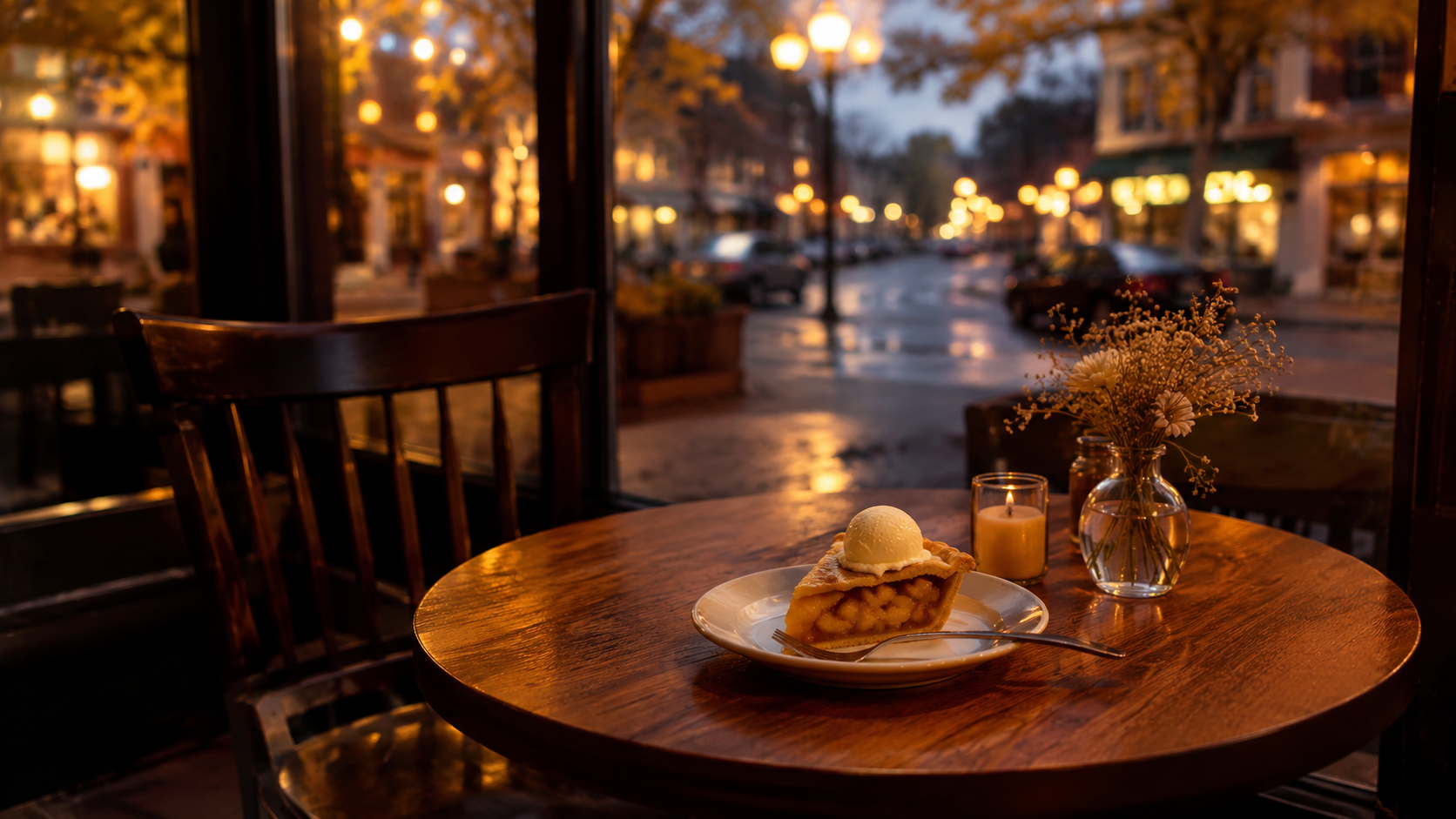
Every single Friday evening at precisely 5:00 PM, Arlene would walk out from the kitchen carrying a small white ceramic plate with a single slice of blackberry pie. She would set it down right in the middle of Table Six. That was the corner booth by the jukebox that didn’t work anymore. The neon red letters on the front of the Wurlitzer had flickered out back in 1998 and nobody ever bothered to call the repair man down from Mobile. Arlene never put a reservation sign on that table. She never explained it to the tourists who came off the water looking for a shrimp basket and tried to slide into the vinyl seats before I could intercept them. She would just stand there wiping her hands on her apron with that tight little look around her mouth and say one sentence.
“That one’s taken, hon.”
The regulars knew better than to ask. My uncle Vernon, who drank four cups of black coffee every morning while complaining about the county commissioners, used to spit his toothpicks into his napkin and look right past Table Six like it was invisible. Nobody sat there. The table stayed clean. The salt and pepper shakers sat side by side like two old soldiers on parade duty. But the weird part was what happened when we locked the heavy glass front door at 8:00 PM. Arlene made us leave all the lights on until nine. She said the highway patrol needed to see the neon sign from the turnoff. We would be back in the kitchen scrubbing the stainless steel counters and dumping the grease traps into the outdoor bins when the front bell would give that little dry ping. I would drop my sponge and walk out to the dining room thinking someone had shaken the locked door handle. The door was always bolted from the inside with the brass chain sliding through the track. The room would be dead silent except for the low hum of the Coca-Cola cooler in the corner.
And the pie would be gone.
Not eaten with a fork. Not messed with. Just the white ceramic plate, licked clean by something or someone who didn’t leave a single crumb behind on the Formica. The first three times it happened I thought Arlene was coming out and eating it herself when my back was turned. I accused her of it right there by the dishwasher on a rainy Tuesday in November. She didn’t get mad. She just looked down at her hands, which were always red from the hot water, and told me I missed the point entirely.
“You think I got time to sneak around eating cold pastry after standing on these flat feet for twelve hours?” she asked.
“Well, somebody’s eating it, Arlene,” I said back, wiping suds off my forearm. “We lock the deadbolt at eight. There’s no back door except the one we padlocked from the outside because the latch is broken. So unless someone is dropping through the ceiling tiles like a raccoon, I want to know who’s clearing that plate.”
She just walked past me into the pantry and started pulling down five-pound bags of self-rising flour without saying another word. That was Arlene. She had a way of making you feel like your questions were small and childish, like asking why the sky was blue or why the tide went out. You just accepted it because fighting her was like arguing with a brick wall painted yellow.
Then came the Friday in October when everything shifted. It was damp outside, that heavy Gulf Coast wetness that gets inside your clothes and makes your hair stick to the back of your neck. We had a rush around noon because the state road crew was paving the shoulder three miles down past the bait shop, and twelve men in orange vests came in and ordered double bacon cheeseburgers and sweet tea by the pitcher. By 4:30 PM the place had cleared out. The smell of fried onions hung thick in the air. I was sweeping up crushed saltine crackers under Table Four when Arlene walked out of the back room with the blackberry pie on the usual white plate. Her steps were slower than usual. She had that little catch in her left hip that acted up whenever the humidity climbed past eighty percent. She set the plate down on Table Six with a tiny click.
“Stay late tonight,” she said without turning around.
“What do you mean stay late?” I asked, leaning my broom against the chrome table leg. “My shift ends at eight. I told my sister I’d help her look over her tax forms.”
“The tax forms can wait till Saturday,” Arlene said, her voice dropping into that flat, gravelly register she used when she wasn’t asking a question. “You’ve been here six months, Clara. You keep looking at that table like it’s a puzzle you got to solve. Stay after I leave. Lock up behind me at eight-fifteen. Watch the door.”
“Arlene, come on,” I said, my chest tightening up a little bit. “You know I don’t like being in here alone after dark. The lights flicker and that old freezer makes that groaning sound like someone dragging a chain across the floor.”
“It’s just an old box,” she said, pulling her gray cardigan tighter around her shoulders and reaching for her canvas purse behind the register. “Nobody ever got hurt by a Frigidaire from 1974. Just stay. You’ll see what I’ve been paying you for.”
She walked out into the parking lot and got into her faded blue Chevy pickup. The engine turned over with that familiar rattling cough she could never get fixed, and then she backed out past the Gulf Power pole and drove away toward the highway. I watched the tail lights disappear through the rain-spotted window. The diner felt different when she wasn’t there. It wasn’t just quiet. It felt hollow, like the walls were holding their breath. I went back to the kitchen and finished wiping down the slicer, my hands moving automatically while my mind kept drifting out to the dining room. Every time the ice maker dropped a load of cubes into the bin, I jumped like someone had fired a pistol behind my ear.
By 8:15 PM I had checked the front door bolt three times. The brass chain was secure. The deadbolt was thrown all the way. I turned off the main fluorescent overheads, leaving only the amber glow of the bug zapper out on the front porch and the small green indicator light on the register. I sat down in the vinyl booth at Table Five, right across the aisle from Table Six, and pulled a paperback novel out of my apron pocket. I didn’t read a single word. I just stared at the white plate across from me. The slice of pie looked dark and heavy under the dim light filtering through the front window. The crust was dusted with just enough sugar to catch the amber streetlamp from outside.
Ten minutes passed. Twenty. My knee started bouncing against the underside of the table, making a dull rhythmic thud that sounded entirely too loud in the empty room.
Then the front bell didn’t ring.
There was no sound of the door opening. No click of the latch. But suddenly there was a shadow sitting in the empty chair at Table Six.
My breath caught somewhere between my throat and my ribs. I didn’t scream, but my fingers dug into the vinyl upholstery so hard my knuckles turned the color of lard. It was a man. Or the shape of one, sitting hunched over with his elbows resting right on the formica edge where nobody was supposed to sit. He wore an old canvas work jacket that looked like it had been soaked in salt water and dried in the sun a dozen times. His head was bowed down toward the plate. He didn’t look up at me. He didn’t make a sound. The air in the diner suddenly felt five degrees colder, right there around my ankles, like someone had left the walk-in freezer door wide open.
“Who’s there?” I whispered. My voice sounded thin and small, like it didn’t belong to me at all.
The man didn’t answer. He slowly reached out a hand that was dark and scarred across the knuckles, picked up the silver fork Arlene had left beside the plate, and took one slow bite of the blackberry filling. The fork made a tiny scraping sound against the ceramic.
“You shouldn’t be in here,” I said, standing up so fast my knees cracked. “The door’s locked. How did you get in through a locked door?”
He turned his head just enough for the amber light from the street to hit the side of his face, and that was when my blood didn’t run cold because that’s not how it works; my brain just stopped working entirely for about three seconds while I stared at the jagged white scar running from his jawline straight down into the collar of his jacket.
“Arlene didn’t tell you about Jonah, did she?” the man said. His voice sounded like two dry shingles rubbing together in the wind.
“Jonah died in the storm,” I breathed, my hand flying up to cover my mouth. “In September of nineteen-eighty-four. My daddy told me about that boat. They never found the hull.”
“They found the boots,” the man said softly, lifting another small bite of the pie to his mouth. “And they found the plate. Arlene always did make a better blackberry pie than my mother did. That’s why I keep coming back on Fridays. A man gets tired of salt water after forty years.”
I couldn’t move my feet. I couldn’t run to the kitchen. I just stood there in the middle of the empty diner while the rain drummed a steady, heavy beat against the tin roof overhead.
“Why table six?” I finally managed to get out, my teeth clicking together.
“Because this is where we sat the night I told her I was taking the boat out anyway,” he said, not looking up from the plate. “She told me I’d find out what happens when you don’t listen. She was right about that, too.”
He finished the last bite of the crust, laid the silver fork neatly across the center of the white ceramic plate, and then he just wasn’t there anymore. The chair was empty again. The air in the room warmed up by two degrees, and the only sound left was the hum of the refrigerator in the corner. I stayed standing by Table Five for a long time, staring at the clean white plate with the single fork resting on it, waiting for my legs to stop shaking so I could walk back to the kitchen and find the mop bucket Arlene had left behind the door.