
8 min read · 1,406 words
I already knew the shape of the betrayal before I pulled my rig into the gravel driveway. Five years of hauling timber across three states will teach a man to read the grain of things even when they look smooth on top. My name is Dale, and for most of my adult life, my hands have been calloused from chainsaws and pine bark, not paperwork. When Martha told me over the phone that we needed every spare dollar for the roof and the plumbing, I sent the checks without asking questions. I was out on the road for twenty-eight days at a stretch, running timber down to the mills in Bangor, trusting that the woman I married was keeping the lights on in our kitchen.
The trouble started on a Tuesday morning in October, though I didn’t know it yet. I had just pulled into a rest stop outside of Augusta to check the straps on my flatbed when my phone buzzed with a text from Martha. She said she was running errands and the mail had come, and she’d put my mail on the counter like she always did. I didn’t think twice about it because that was our routine for ten years. But then the local hardware store mailed a second copy of a rebate form to my old post office box by mistake, and that rebate listed a different property altogether.
It wasn’t a huge amount of money, just $87.50 for a batch of pressure-treated lumber and copper piping. But the address on the form wasn’t our rural route number off Route 9. It was a street name in a subdivision over in Orono, about forty miles away from our homestead. I stared at the yellow slip of paper while my rig idled, the diesel engine vibrating right through the steering wheel. I remembered Martha telling me back in April that she had to replace a rotted sill plate under the back porch. I had sent her $1,400 for that exact job on top of the regular household money.
The next few days on the road were quiet, too quiet. I kept my foot down on the interstate, watching the yellow lines blur past while my mind chewed on that Orono address like a dog with a dry bone. By Friday afternoon, I couldn’t haul another log without knowing what was behind those numbers. I didn’t go home first. I drove straight down Route 2 toward Orono with the GPS map glowing faint against the dashboard in the grey autumn dusk.
The house on the rebate form was a modest ranch-style build with a peeling white garage door and a rusted swing set in the side yard. A late-model sedan sat in the dirt driveway, and I recognized the dealer sticker from the lot in Brewer where Martha said she bought her groceries. I killed my headlights a hundred yards up the road and rolled to a stop beneath a dying maple tree. My heart wasn’t hammering like it does in the movies. It was slow and heavy, like a dead weight settling into the bottom of my boots.
A woman came out the side door carrying a plastic laundry basket, her dark hair pulled back in a clip. She looked maybe thirty-five, wearing an oversized flannel shirt that looked suspiciously like the one I left hanging on the back of our bedroom door two years ago. Two little girls came running around the corner of the house behind her, chasing a yellow plastic ball. The youngest one stopped dead in her tracks when she saw my truck idling by the curb, and she raised a small hand to wave at me with a gap-toothed grin.
She had my mother’s smile. I knew it instantly, that same crooked left corner that showed up in every family photo from my childhood up in Aroostook County.
I sat there in the cab of my rig with both hands locked onto the steering wheel until my knuckles turned the color of chalk. I didn’t yell. I didn’t punch the dashboard or kick the door open like some hothead in a bar fight. I just shifted the transmission into reverse, backed out past a mailbox bearing a last name that wasn’t mine, and drove thirty miles south to the branch bank in Brewer where Martha and I kept our joint savings.
The teller behind the glass knew me well enough to nod when I walked in with my sawdust-stained jacket and my work boots. I didn’t waste time with pleasantries or explanations about what I had just seen parked in that Orono driveway. I laid my driver’s license on the counter along with my debit card and told her to freeze every single cent we had in the checking and savings accounts. She looked at me sideways, her fingers hovering over the keyboard for a second before she asked if there was a problem with the mortgage auto-pay.
I leaned my forearms against the scarred wooden ledge and looked her right in the eye. “There isn’t a mortgage on that house anymore, and there isn’t a marriage either,” I told her, my voice dropping an octave lower than usual.
She didn’t ask another question after that. Her fingers started flying across the keys, printing out transaction histories and freezing the debit cards with crisp, mechanical clicks. When she handed me the balance printout across the counter, the total made my stomach turn over. Over $38,400 had drained out of our joint account over the last three years, funneled into building materials, utility bills, and car payments for a life I was paying to keep running while I slept in the sleeper cab of my truck.
I folded the paper into four tight squares and shoved it deep into my front pocket right next to my pocketknife. I drove back to our real house on Route 9 just as the sun was dropping behind the ridge and painting the pine trees the color of rust. Martha’s car was parked in the gravel, and the kitchen light was burning bright behind the yellow curtains I helped her hang back when we first moved in. I didn’t turn off the truck engine. I just sat there in the dark cab watching the shadows move across the windowpane, listening to the rhythmic ticking of the cooling manifold beneath the hood.
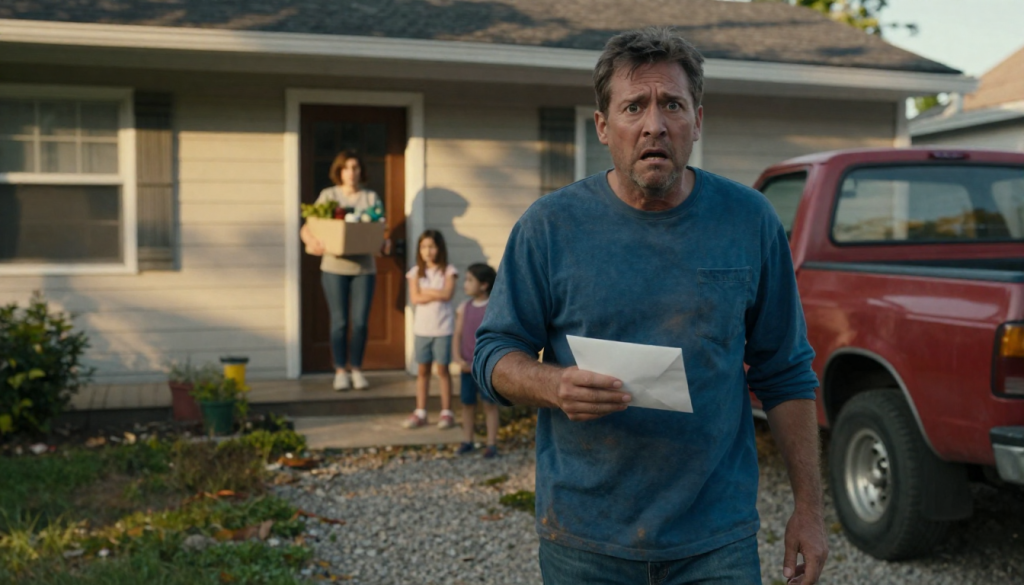
The front door opened before I even unbuckled my safety belt, and Martha stepped out onto the porch with a cordless phone pressed to her ear. She stopped dead when she saw the big rig idling by the woodpile, her face going slack as the phone slipped an inch from her cheek. I killed the engine then, and the sudden silence in the yard felt heavier than forty tons of white pine logs. I climbed down out of the cab one slow step at a time, my boots crunching loud against the frozen gravel.
She didn’t run inside or try to lock the door. She just stood there under the porch light with her fingers clutching the plastic phone like it was a lifeline she was about to lose.
“You went to Orono, didn’t you?” she whispered, her voice shaking so hard the words barely made it across the yard.
I didn’t rush up the steps toward her. I stopped about ten feet short, right by the split-rail fence I had spent three weekends building the summer before last. I reached into my pocket, pulled out the folded bank statement along with the hardware store rebate form, and dropped them both into the damp grass between us.
“I saw the girls, Martha,” I said, and the words came out flat and dry as old cedar. “Hope they like the lumber.”
She opened her mouth to say something, some excuse about the roof or the plumbing or the hard winters we had been through, but nothing came out except a thin, ragged breath that smelled like woodsmoke and cold air. I didn’t wait for her to finish. I turned my back on the porch light, climbed back up into the cab of my truck, and shifted gears without looking back once.