I was wrong about why old Earl spent his afternoons out behind the hardware store on Oak Street, and I admit it right here because ignoring the truth for four months is something I have to carry. I figured he was just a lonely old man with nothing better to do than watch the dust kick up off the delivery trucks. He wore the same gray cardigan every Tuesday, even when the valley heat got up to ninety-eight degrees and the asphalt out in the alley started to smell like hot tar. People in town called him touched in the head ever since the county took down the old lumber mill where he spent thirty-two years pulling green chain. I drove past him twice a day in my pickup truck, hauling scrap metal down toward the interstate, and I never once slowed down to see what he was looking at.
The town of Bakersfield outside the city limits don’t have much room for sentiment when you are sixty-eight years old and your knees sound like gravel in a tin can. My name is Dale, and I spent twenty-four years driving a flatbed rig for the county road department before my back gave out in November. When you stop working, the silence in your own kitchen gets heavy enough to choke you. That was why I started parking my truck down by the municipal park on Thursday afternoons, just to watch the kids from the elementary school chase each other around the rusted jungle gym. It was quiet down there, or at least it was supposed to be until Earl showed up on that green slatted bench by the oak tree.
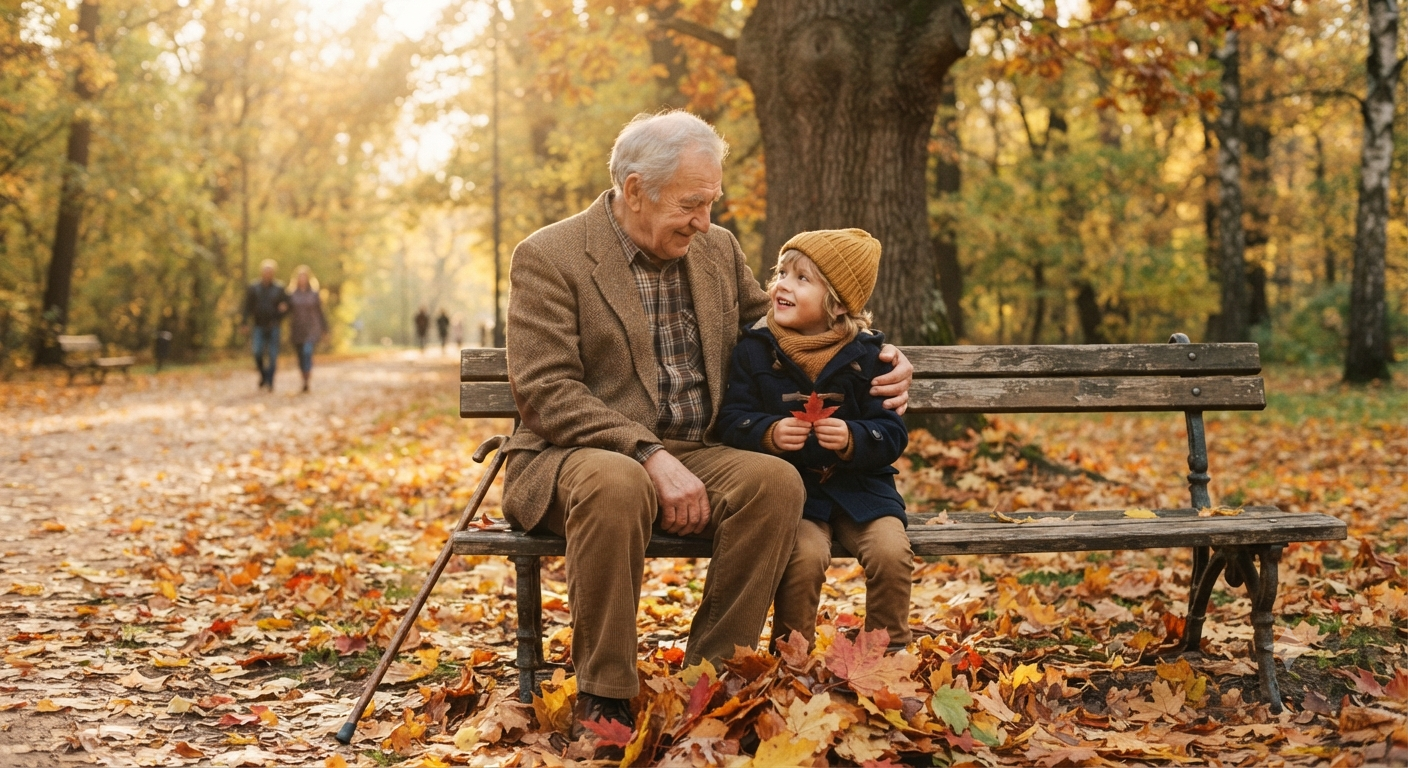
Earl had been coming to that same spot at 2:15 every single day for four years, right down to the minute when the school bell rang across the asphalt. I watched him from my truck cab for three weeks before I ever got out to say a word. He didn’t read the paper and he didn’t have a transistor radio playing ball games like the other old men who sat by the horseshoe pits. He just sat with his hands folded over the crook of his hickory walking stick, staring straight ahead at the gravel path where the children ran. His boots were scuffed down to the gray leather at the toes, and his shirt buttons didn’t quite match, like he dressed in the dark or didn’t care who saw him.
Three weeks later, the radiator hose on my Ford blew right as I pulled into the gravel lot by the park, spraying green steam all over the chrome grill. I was under the hood with a greasy rag trying to tighten the clamp when I heard the old man’s voice carrying clear over the hum of the traffic on Highway 99. He wasn’t yelling at anyone, just talking low and steady like a man reading out of an old Bible on a Sunday morning. I wiped the black oil off my hands and walked over toward the bench to see if he needed a lift home before the sun went down behind the oil rigs. That was when I saw the second dent in the wood right beside him, where the paint had peeled off down to the raw pine.
A little boy in a faded blue Little League jersey had wandered away from the water fountain and stopped dead in front of Earl’s knees. The boy had a red baseball cap turned backward and a scraped elbow that still had a little dried blood on the skin. He stood there for a minute just staring at the empty space on the right side of the bench before he looked up into the old man’s pale blue eyes.
“Why are you always alone?” the boy asked.
Earl didn’t blink or look away from the empty spot beside him. He just smiled, and the lines around his eyes crinkled up like dry corn husks in July.
“I’m not alone, son,” Earl said. “My wife is right here on this bench with me.”
The boy tilted his head sideways, squinting hard at the weathered wood between them like he expected something to materialize out of the summer haze.
“I don’t see anyone,” the boy said.
Earl reached out his right hand, the knuckles swollen and stiff from forty years of heavy timber work, and patted the grain of the wood three times very gently.
“She’s here. Right here,” Earl said, his voice dropping an octave into something steady and low. “We met on this exact bench fifty years ago this coming June, before they paved the road over by the canal.”
I stopped about ten feet away with my greasy rag balled up in my fist, feeling like I had wandered into someone else’s front room without knocking. The boy didn’t laugh or run off like kids usually do when old folks start talking strange. He just reached out and touched the wood where Earl’s hand had been.
“Can I meet her?” the boy asked.
Earl nodded once, slow and deliberate, and moved his leg over to give the kid room on the slat.
“She’s listening,” Earl told him.
And for the rest of that afternoon, while the sun dipped low enough to turn the sky over the oil fields the color of a bruised peach, the old man told the boy his love story from beginning to end. He didn’t rush it, and he didn’t skip the hard parts about the winter of seventy-six when the freeze killed the orange crop and they didn’t have twenty dollars to their name for three months. He talked about how Clara used to fry salt pork in an iron skillet with a chipped handle, and how she laughed the day he dropped his wedding band down the grease trap behind the garage. I stood by my truck with the steam hissing out of the radiator, listening to every word carry across the dry grass, and I didn’t touch my tools once until the streetlights flickered on.
Two days later, I drove back down to the park at 2:10, even though my truck was fixed and I didn’t have any business being there. Earl was sitting in his usual spot, his shoulders slightly rounded under the gray cardigan, watching the kids come out of the school gates with their heavy backpacks. I walked across the grass and sat down on the other end of the bench without asking, resting my forearms on my knees. Earl didn’t look at me right away; he just kept his eyes fixed on the gravel path where a little girl in a yellow dress was skipping rope.
“Hose hold up?” Earl asked, his voice dry as cornstalks.
“Put a new one on yesterday,” I told him. “Cost me eighteen dollars down at Napa.”
We sat there in the heat for twenty minutes without another word passing between us, just watching the dust settle on the hood of my truck. I thought about my own wife, Martha, who passed away in the county hospital three years ago while I was out on a two-week run up to Redding. I spent those two weeks hauling lumber through the mountains and never answered the cell phone when she called on Tuesday night because I was mad about some freight mix-up in Weed. When I got home, the house was cold and the coffee pot was still half-full on the burner, but she wasn’t sitting in her green armchair by the window. I never went back on the road after that, but I didn’t talk to nobody either, just stayed out in the garage with my tools until the neighbors stopped waving when they drove past.
“She liked the yellow ones,” Earl said suddenly, pointing his walking stick toward a patch of wild mustard weeds growing by the chain-link fence.
“Who’s that?” I asked, my throat feeling tighter than it ought to have.
“Clara,” Earl said, still looking straight ahead. “Every spring she’d pick a whole coffee can full of ’em and set ’em right on the oilcloth table in the kitchen. Said they smelled like rain before it hits the dust.”
I looked down at my own boots, at the heavy steel toes caked with dry Bakersfield mud from the job site. I knew then that Clara hadn’t sat on that bench in ten years, not since the headstone went in down at Union Cemetery by the railroad tracks. But I also knew that Earl wasn’t lying to himself or to the boys who stopped by to ask him questions. He was just keeping the chair warm until his own shift was over, same as I was trying to do with my truck.
The next Thursday I brought two paper cups of black coffee from the Chevron station down on the corner, setting one on the wood right beside Earl’s hand without saying a word about it. He looked down at the steaming paper, then up at me with those pale, watery eyes that had seen every oil boom and bust in Kern County since the Eisenhower administration. He didn’t say thank you, and I didn’t expect him to. He just picked up the cup with both hands to warm his fingers against the afternoon chill that always comes off the desert right before sundown.
“You’re Dale’s boy,” Earl said, taking a small sip. “Drive that blue Ford with the busted fender.”
“Used to drive a flatbed,” I told him. “Now I just sit around and wait for things to break.”
Earl nodded once, slow and heavy, and stared back out toward the schoolyard where the last few kids were walking toward the gate.
“Well,” Earl said, and his hand moved three inches to the left to rest on the empty wood beside him. “The waiting is the hardest part of the haul.”
I stayed there until the sun went down behind the pump jacks and the sky turned that deep, bruised purple that means the night wind is starting to howl off the mountains. We didn’t talk anymore after that, just sat side by side on the green slats while the streetlights hummed to life above us one by one. For the first time in three years since Martha left that cold kitchen behind, I didn’t feel the need to start my engine and drive away before dark. I just reached out, set my hand flat on the worn pine board between us, and waited for the morning.